

Taittinger Prestige Rosé
Red fruit in the starring role: raspberry, cherry and cassis, playful and lively in the glass. The house's pink bottle from Reims, containing all three Champagne grapes and a color that comes from still red wine.


Red fruit from a red wine
Prestige Rosé gets its color not by macerating grape skins, but by first making a small portion of the pinot noir into still red wine and then adding it to the blend. This method is called assemblage and is permitted in Champagne, whereas it is not allowed elsewhere in France. The advantage is precision: the winemaker determines to the drop how much color and how much red fruit goes into the bottle.
The grapes are the same three as in the house's white bottle: chardonnay, pinot noir and pinot meunier, and some come from its own vineyards. The fact that the house owns 288 hectares means that for a rosé like this, it is not dependent on whatever the market happens to offer. The result is a rosé that puts red fruit first while remaining light and fresh, as the house style dictates.
In brief
Raspberry, cherry and cassis
Full of red fruit
Raspberry and cherry arrive first, followed by cassis. More pronounced and darker in fruit than the house's white bottle, where peach and white flowers take center stage.
Playful and lively
Playful is the word the house itself uses, and it fits: the fruit jumps forward without becoming heavy, while the mousse keeps things lively.
Fresh and light
Fresh and light, exactly as the house style dictates. The champagne finishes neatly and thereby invites a second glass, making it a pleasant aperitif champagne.
Tasting profile of the Prestige Rosé on its own, at 8 to 10 degrees. The blackcurrant comes through more clearly once the champagne warms slightly in the glass.
How to drink Prestige Rosé
Chill the bottle to 8 to 10 degrees and twist the bottle, not the cork, when opening. Pour along the side of a tilted glass until it is about two-thirds full; a 75 cl bottle yields around five glasses.
As an aperitif
This bottle is primarily recommended as an aperitif. Pour about 12 cl per glass and return the bottle to the cooler; the red fruit makes it distinctive enough to drink without snacks.
Glass: flute or tulip →With sushi and ceviche
For raw fish, this is the bottle to choose of the two. Pour 10 cl into a white wine glass: the raspberry and cherry have room to shine and pair surprisingly well with lime and soy sauce.
Wine glasses →With a splash of blackcurrant liqueur
If you want a Kir Royal, stick to 15 ml of crème de cassis per 110 ml of champagne. This rosé already contains blackcurrant, so a full measure quickly makes the drink sweet and heavy.
Go to the recipe →The best cocktails with a rosé sparkling wine
Red fruit already in the bottle calls for a mixer that does not overpower it. Choose something bitter or sour instead of adding even more fruit.

Kir Royal
Crème de cassis at the bottom, then top up with bubbles. The blackcurrant in the bottle blends in seamlessly.
Negroni Sbagliato
Campari and sweet vermouth, topped up with bubbles instead of gin. The bitterness sharpens the red fruit.
Sgroppino
Lemon sorbet, vodka and bubbles whipped into a foam. The citric acid keeps the raspberry fresh.
Champagne Cocktail
A sugar cube with bitters at the bottom, then slowly top up. With a rosé, it becomes deeper in color.Which glass goes with this rosé?
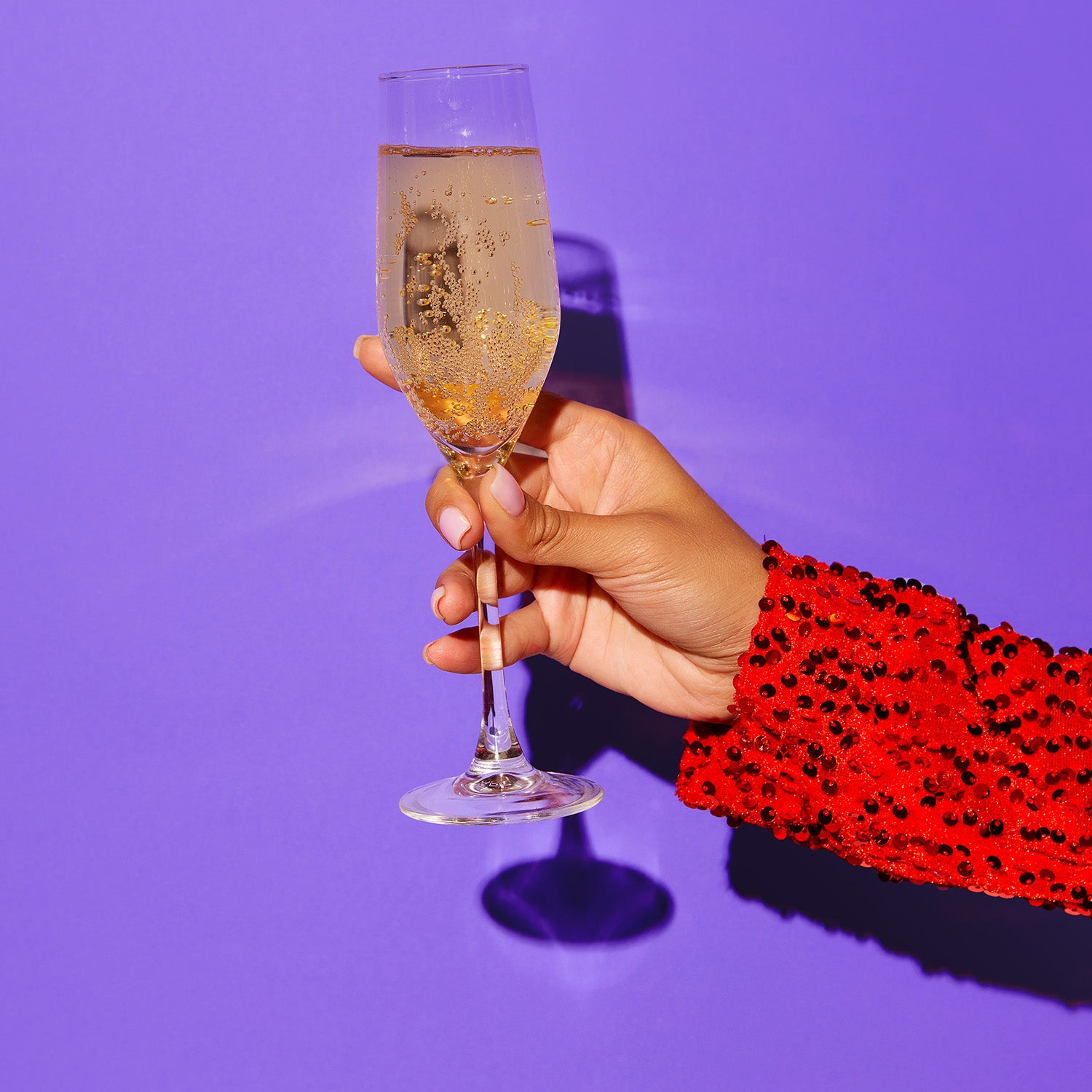
A flute keeps the bubbles for longer and is the safe choice for an aperitif. If you really want to smell the raspberry and blackcurrant, choose something wider or even a white wine glass. A coupe looks festive but lets the bubbles escape faster.


More Taittinger flavors

Taittinger
Where it began. On the brand page, you'll find everything about Taittinger: origins, varieties, and classic cocktails.
To Taittinger →Everything about champagne: the varieties, the best-known brands, and the cocktails.
Questions about Taittinger Prestige Rosé
Can't find your question? Read more on the Taittinger page or explore our cocktail recipes.
Everything about Taittinger →