

Ruinart Rosé
A rosé with almost half chardonnay, and you can taste it: guava, lychee and raspberry on one side, mint and pink grapefruit keeping the whole thing crisp. The bottle that carries you from aperitif through dessert.


Why this rosé stays so crisp
Ruinart Rosé consists of 55 percent pinot noir and 45 percent chardonnay, and 18 percent of the blend is red still wine. The latter gives it its color: delicate pomegranate pink with a slight orange sheen. This is the method permitted in Champagne and not found elsewhere in France, giving the winemaker control over exactly how much red fruit ends up in the bottle.
The proportion of chardonnay is what sets this rosé apart. With many rosé champagnes, red fruit is the whole story; here, an almost equally substantial layer of white grapes lies beneath it, making itself known through the mint and pink grapefruit that keep the balance. As a result, the bottle stays bright and fresh rather than full and rounded, and you can keep serving it from aperitif through dessert.
In brief
Guava and lychee, with mint on the finish
Subtle and exotic
Not a dense strawberry aroma, but guava and lychee that stand out first, followed by raspberry and cherry. Then rose and pomegranate join in.
Bright and full
Bright in flavor yet full on the palate. The red fruit is clearly present without making the champagne heavy.
Mint and grapefruit
Mint and pink grapefruit take over and keep everything in balance. That is the chardonnay, and why this rosé tastes drier than it smells.
Flavor profile of Ruinart Rosé neat, at 8 to 10 degrees. Served too cold, the guava and lychee fade into the background, leaving mainly the freshness.
From aperitif to dessert
This bottle is meant to last through an entire meal. Serve at 8 to 10 degrees, fill to about two-thirds, and return the bottle to the cooler between courses.
With sushi and ceviche
Pour about 12 cl with raw fish. The exotic fruit goes well with ginger and soy sauce, while the mint and grapefruit keep the fish fresh where a full-bodied rosé would overpower it.
Glass: tulip or flute →With Parma ham and lamb
With more savory dishes, a larger glass wins. Pour 10 cl into a white wine glass, give it a minute, and the red fruit will clearly come forward against the saltiness of the ham.
Wine glasses →With dessert
The page also mentions this rosé with dessert. Stick to fruit or something containing raspberries: a dry champagne loses out to rich chocolate.
More about champagne →Rosé champagne in the glass
With this fruit in it, you need little else. Keep the splash small, because everything you add comes at the expense of the mint and grapefruit that give this rosé its tension.

Bellini
Peach purée topped up with bubbles. With a rosé, it becomes deeper in color and red fruit joins in.
Rosé cocktails
Cocktails that go into the glass in pink. Rosé champagne is the easiest base for them.
Sgroppino
Lemon sorbet, vodka, and bubbles whipped into a foam. A dessert and a drink in one.
Aperitif cocktails
The drinks that open an evening, with a rosé as the liveliest bubble of the bunch.The right glass for Ruinart Rosé
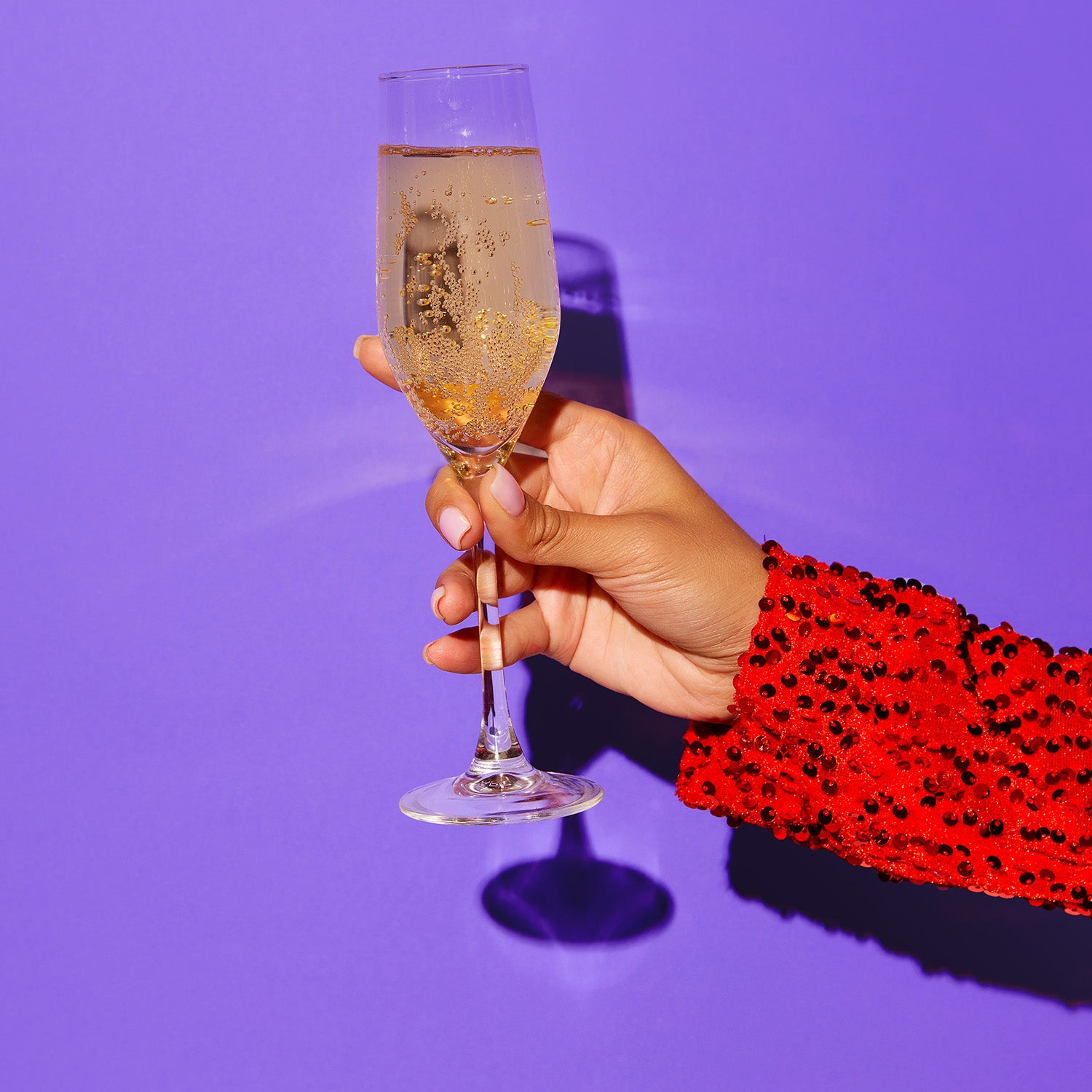
A wide bowl brings out the guava, lychee, and red fruit; a white wine glass takes it one step further. A flute keeps the bubbles intact the longest, while a coupe is pure celebration.


More Ruinart flavors

Ruinart
Where it all began. On the brand page, you can read everything about Ruinart: origins, varieties and classic cocktails.
To Ruinart →
R de Ruinart
The house's only bottle with all three grape varieties. Stone fruit and almond, with a fresh finish.
View R de Ruinart →
Dom Ruinart Blanc de Blancs
One hundred percent grand cru chardonnay. Toasted bread, chestnut and flint, with an ultra-fine bubble.
View Dom Ruinart Blanc de Blancs →
Dom Ruinart Rosé
Pomegranate, blood orange and violet on a chardonnay base. The house's prestige rosé.
View Dom Ruinart Rosé →Questions about Ruinart Rosé
Can't find your question here? Read more on the Ruinart page or explore our cocktail recipes.
Everything about Ruinart →