




The Carajillo recipe
for your table
Fill a tumbler with one large ice cube and pour the Licor 43 over it.
Pull a fresh double espresso.
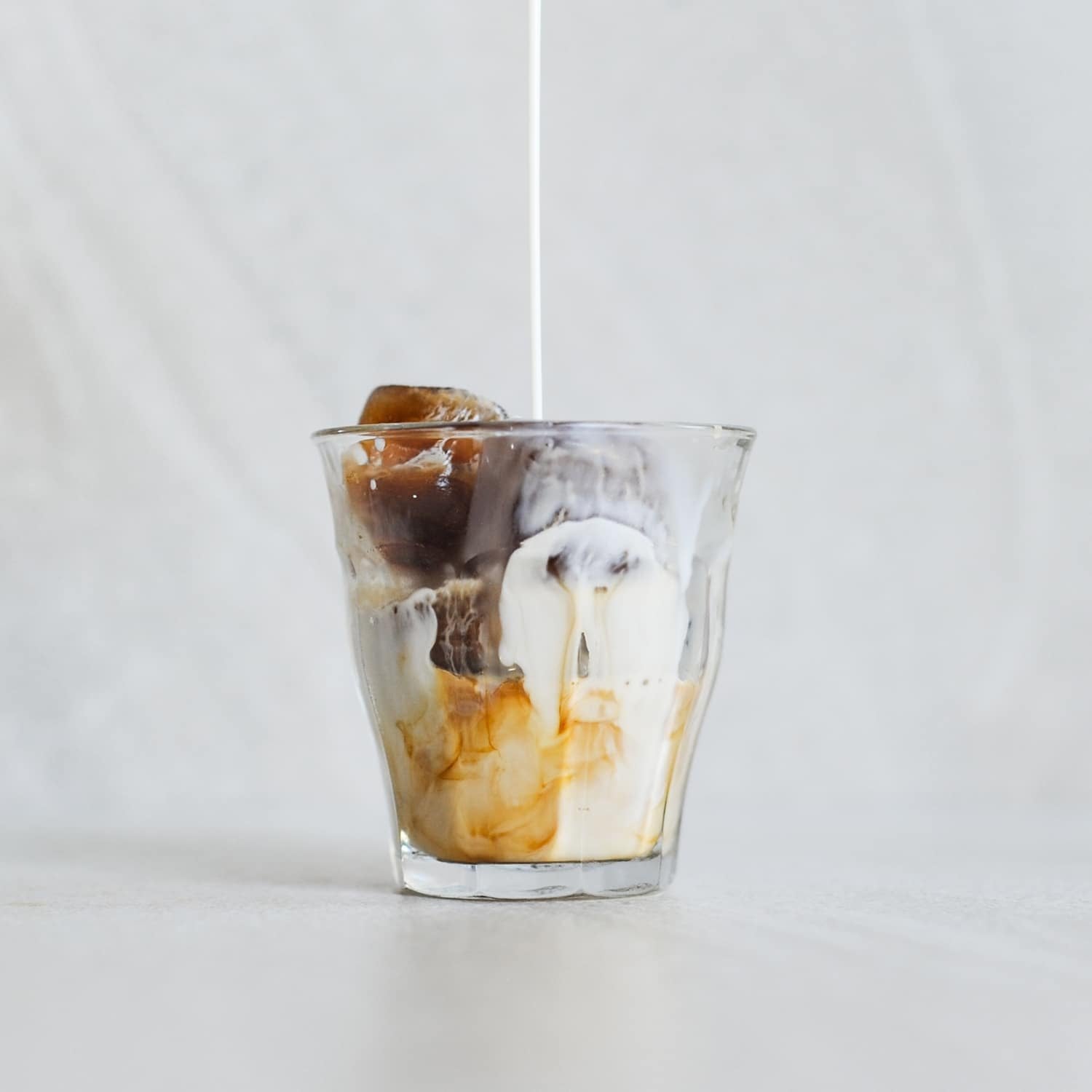
Slowly pour the espresso over the ice; the crema will remain on top.
Serve immediately; the guest stirs it themselves, or not (shaking it with ice works too: then you get a foamy 'carajillo shakerato').
What did you think of this recipe?
One click on a star is enough. If you want to add something, we will review it first before it appears here.
Save this recipe
Send the Carajillo recipe to your own email, so you have it at hand when you are about to make it. You will also receive a €5 discount code on orders from €50, for the glasses that go with it.
The story
Carajillo began in Spain as workers' coffee with a splash of brandy. The name is said to come from 'coraje', meaning courage. Spanish migrants took the custom to Mexico, where the local favorite Licor 43 (the vanilla liqueur from Cartagena with 43 ingredients) replaced the brandy and the cocktail began to be served over ice. In this form, Carajillo became the signature digestif of Mexican food culture and began its global rise around 2020, riding along with the espresso martini craze. Faster and simpler than the latter, and at least as good according to its fans.
The right glass
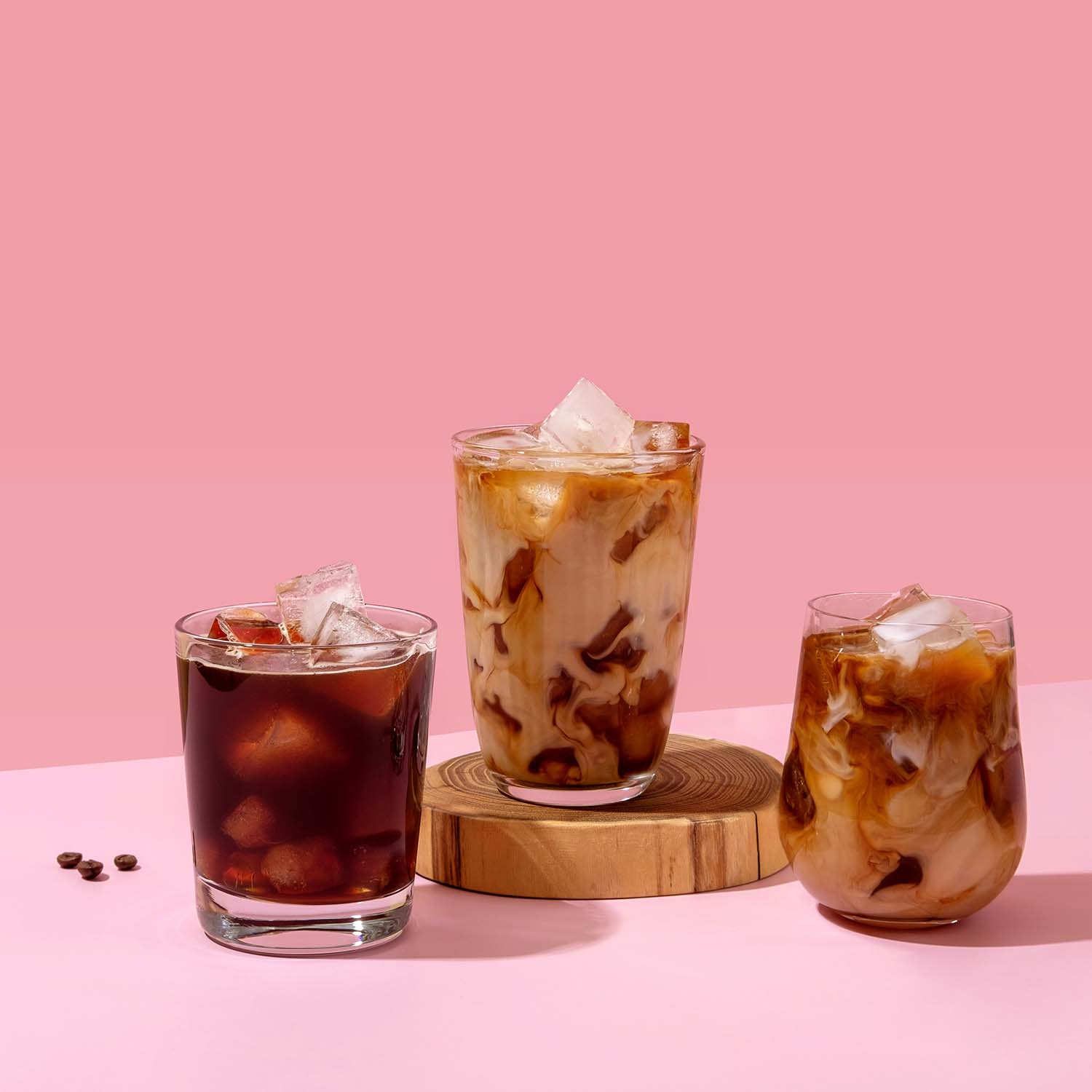
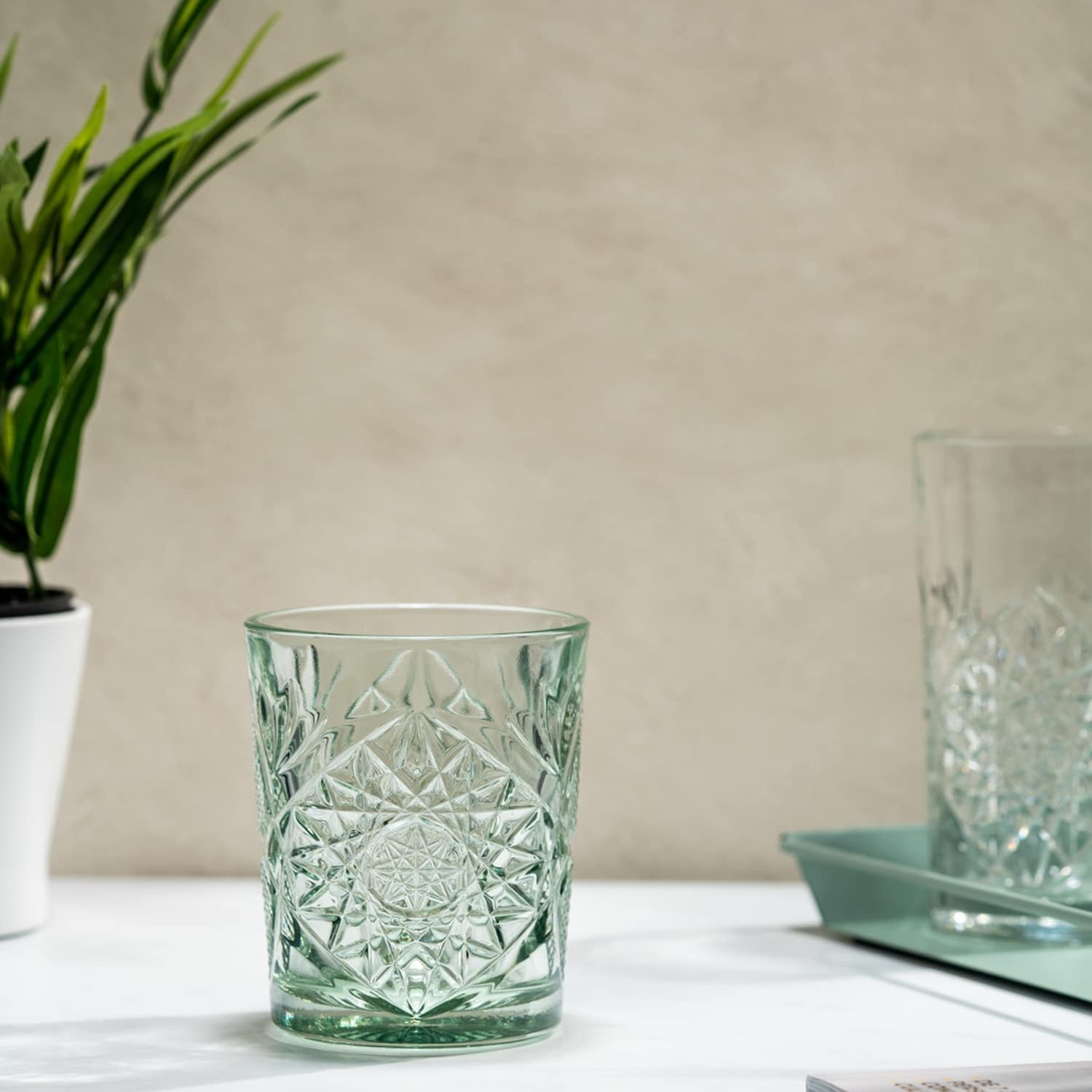
Carajillo is served in a low, clear glass so the layers remain visible: golden yellow at the bottom, dark above, with crema as the crown. A compact 25 cl tumbler is perfect; if you serve it as an after-dinner drink, choose a generous liqueur glass. Thick, clear glass with one large ice cube gives the best appearance and the slowest melting process. For a tumbler that comfortably fits one large ice cube, take a look at our old fashioned glasses.

RCR Etna Tumbler 25 cl (6 pieces)

Nude Glass Primeur Liqueur Glass 10 cl (6 pieces)
Both sets together € 63,90.
The right tools
For a Carajillo, besides the glass, you need a shaker, a jigger for precise measuring, a fine strainer for double straining and large ice blocks. These are the bar tools we use ourselves; you can find everything in our bar tools & cocktail sets.


Glassware set (our choice 01) + 4 bar tools together € 88,75.


Variations & twists
Shaken with ice (a “shakerato”), it develops a foamy head like an espresso martini; served layered, it remains a visual spectacle. In Spain, they still make it with brandy, making it warmer and drier. Add a scoop of vanilla ice cream and dessert is complete. Looking for more inspiration? Browse more than 100 cocktail recipes.
Serving tip
Serve it “layered” and let your guest stir it themselves. They’ll taste the liqueur first, then the coffee, and finally the perfect blend. It’s also delicious as a dessert substitute after an elaborate dinner.
Good to know
Carajillo or Espresso Martini
Two coffee cocktails that have little in common apart from the espresso. The Carajillo consists of two things, 4.5 cl Licor 43 and a double espresso, poured over a large ice cube and ready in a minute. The Espresso Martini is made with vodka, coffee liqueur, espresso, and syrup, shaken vigorously, and served in a chilled coupe with a crema foam head. In terms of flavor, the Carajillo is sweeter and more vanilla-forward, while the Espresso Martini is drier and more coffee-forward. One is an after-dinner drink, while the other is usually enjoyed at the start of the evening.
Licor 43 or Spanish brandy
In Mexico, Licor 43 is the standard, and it’s the version you see everywhere: 43 botanicals, plenty of vanilla, and enough sweetness to balance espresso’s bitterness. In Spain, where the drink originated, it’s made simply with brandy, often brandy de Jerez, and sometimes rum or anise liqueur. That Spanish version is drier, warmer, and usually served with hot coffee rather than over ice. In that case, use 3 cl of brandy in a small cup of coffee, optionally with half a sugar cube. Two drinks, one name, both worth trying.
The carajillo shakerato
Want foam? Shake it. Add 4.5 cl Licor 43 and a fresh double espresso with plenty of ice to a shaker and shake vigorously for fifteen seconds; then strain into a chilled glass. The oil from the espresso emulsifies and creates a dense, light-brown head that lasts for a few minutes. This version is colder, airier, and goes down faster than the one with the large ice cube, where the layers remain visible. In Mexican bars, you’ll see both versions on the menu alongside each other. Serve immediately, as the foam settles quickly.
Without an espresso machine
A moka pot comes closest: use 4 cl of what it produces and you’ll have virtually the same concentration. An Aeropress with a double dose of coffee and little water also works. Instant espresso is an emergency solution that turns out surprisingly acceptable, provided you make it strong with 2 grams per 4 cl of water. What doesn’t work is regular filter coffee, because it’s too thin and acidic and disappears completely behind the liqueur. Cold brew is the best alternative if you want to keep it cold: use 6 cl instead of the espresso.
Carajillo 43: why this liqueur works
A carajillo 43 is so called because Licor 43 is the standard liqueur; the name of the bottle refers to the 43 ingredients used to make it. Keep the bottle in the refrigerator, because the temperature difference with the fresh espresso is exactly what keeps the layers separated in the glass. A chilled liqueur also lets the crema float longer. Do not replace it with vanilla syrup: it lacks the alcohol and spice, making the carajillo cocktail flat and sticky. Measure out 4.5 cl with a jigger, because it is easy to pour too much by eye.
Spanish coffee carajillo, served hot
Spanish coffee carajillo is served hot and in a small glass so it does not cool halfway through. Rinse the glass with hot water first, because the temperature drops immediately in a cold glass. Pour the brandy into the coffee, not the other way around, so the layer of crema on the espresso stays intact. When making carajillo coffee for the first time, feel free to leave out the sweetener at first and taste it; the brandy already adds roundness. In Spain, it is often served with a strip of lemon peel or a cinnamon stick.
Frequently asked questions
What is a Carajillo?
A Carajillo is coffee with liqueur: 4.5 cl of Licor 43 poured over a large ice cube, with a fresh double espresso slowly poured over it. The vanilla-sweet Spanish liqueur and the bitter coffee balance each other's sharper edges. In Mexico, it is the standard end to a good lunch.
Which liqueur do you use for a Carajillo?
Licor 43, the vanilla liqueur from Cartagena made with 43 ingredients, is the standard in the Mexican version. In Spain, they still make carajillo with brandy, resulting in a warmer, drier drink. The liqueur is the main flavor here, so do not simply replace it with something else.
What is the difference between a Carajillo and an Espresso Martini?
A Carajillo has two ingredients and requires no shaker: Licor 43 and espresso over ice. An Espresso Martini is made with vodka, coffee liqueur, and espresso, then shaken until it forms a layer of foam. If you do want foam, shake the Carajillo with ice; this is called a carajillo shakerato.
Which glass do you use for a Carajillo?
A compact tumbler of about 25 cl or a generous liqueur glass works best. Thick, clear glass with one large ice cube keeps the layers visible, from golden yellow at the bottom to the crema on top, and makes the ice melt slowly. See our liqueur glasses.
Everything for your bar,
at one address
Hospitality-quality glasses, supplied per set. Order today, delivered quickly.
Shop the glasses →