


Gin
From London Dry to cucumber and pink: in twenty years, gin has gone from dusty to the busiest shelf. What exactly it is, which varieties there are, how to drink it and which glass goes with it.


The best-known gin brands
Three brands you'll find in almost every bar, each from a different corner of the shelf.
Tanqueray
Four botanicals and nothing else, bottled at an unusually high percentage. The benchmark for a dry, piney gin.
About Tanqueray →Gordon's
The world's best-selling gin, at the legal minimum. Softer than Tanqueray and the standard choice for a no-fuss gin and tonic.
About Gordon's →Hendrick's
Scottish gin with rose and cucumber, in the dark apothecary bottle. The bottle that made the contemporary style popular in the Netherlands.
About Hendrick's →Our drinks page lists all the brands we cover, from gin to whisky.
Every gin in one place, by brand
3 brands and 13 varieties, each with its own page about flavor, cocktails and the right glass.


One mandatory flavour, and otherwise complete freedom
Gin is a distilled spirit whose predominant flavour must come from juniper. That is not a guideline but a legal requirement, and it is virtually the only one: beyond that, a distillery may use whatever it wants. In practice, coriander, angelica root, orris root and citrus peel are almost always added alongside juniper, and that is where the differences begin. Precisely because there is so much room for variation, there are now hundreds of gins on the shelf that differ considerably from one another.
The base is neutral alcohol, usually made from grain. It is redistilled with the botanicals, either in a basket in the vapour or placed in the still. The minimum is 37.5% alcohol; in practice, most gin is between 37.5 and 47%. The higher the percentage, the more of the botanicals remain present in a gin and tonic, which is precisely why more expensive gins are often bottled at a higher strength.
In brief
Four styles you'll find on every shelf
The differences lie in what may still be added after distillation, and in how far a distillery dares to move away from juniper.
London Dry
The strictest category: all the flavour must be introduced during distillation; nothing may be added afterwards, and there may be virtually no sugar. Dry, piney and spicy. "London" says nothing about the location.
Contemporary gin
The modern style, in which juniper takes a back seat to flowers, cucumber, tea or spices. Still gin, but with a completely different character.

Flavoured gin
Gin with fruit added after distillation: strawberry, raspberry, lemon or passion fruit. Sweeter and much more approachable, and usually bottled at the legal minimum.

Alcohol-free
Not gin according to the law, but made with the same botanicals. You miss the body alcohol provides; with plenty of ice and a robust tonic, it comes closest.
Old Tom is the sweeter predecessor, Navy Strength is 57% ABV and sloe gin is a liqueur made from sloes.
Piney, spicy and almost always citrusy
Juniper & citrus
That characteristic piney, resinous note of juniper, almost always topped with citrus peel. A contemporary gin adds flowers or cucumber.
Dry and spicy
Dry, with peppery spiciness from coriander and an earthy note of angelica root. A flavored gin is sweet and fruity here instead.
Clean and short
A dry, clean finish with juniper and sometimes a slightly bitter edge from the orris root. The higher the percentage, the longer it lingers.
Flavor profile of a classic London Dry. A contemporary gin scores higher on fruity and lower on spicy; a flavored gin rates around 4 for sweetness.
Three ways to drink gin
Gin is rarely a bottle to drink neat. The art lies in the proportions, the ice and the garnish.
As a gin and tonic
5 cl gin with 15 cl ice-cold tonic, in a large glass completely filled with ice. More ice actually melts more slowly than less ice, so pour generously. Garnish according to the gin: lemon peel with a London Dry, cucumber with Hendrick's.
Gin and tonic recipe →In a Dry Martini
Stir 60 ml gin and 10 to 20 ml dry vermouth with plenty of ice for thirty seconds, strain into an ice-cold glass and finish with a lemon peel or an olive. Stir, don't shake: it keeps the drink clear.
Dry Martini recipe →In a Negroni
Equal parts gin, Campari and sweet vermouth over a large ice cube, with an orange peel. Bitter, sweet and spicy at the same time, and one of the few cocktails in which a robust gin truly shines.
Negroni recipe →The best-known gin cocktails
No other spirit appears in so many classics. These are the recipes you start with.

Gin and tonic
Gin, tonic, plenty of ice and the right garnish. Simple, and therefore difficult.
Negroni
Equal parts gin, Campari and sweet vermouth. Three ingredients, no doubt.
Dry Martini
Gin and dry vermouth, ice-cold and clear. The most talked-about cocktail there is.
Tom Collins
Gin, lemon, sugar and sparkling water. A gin and tonic for those who don't like tonic.The right glass for gin
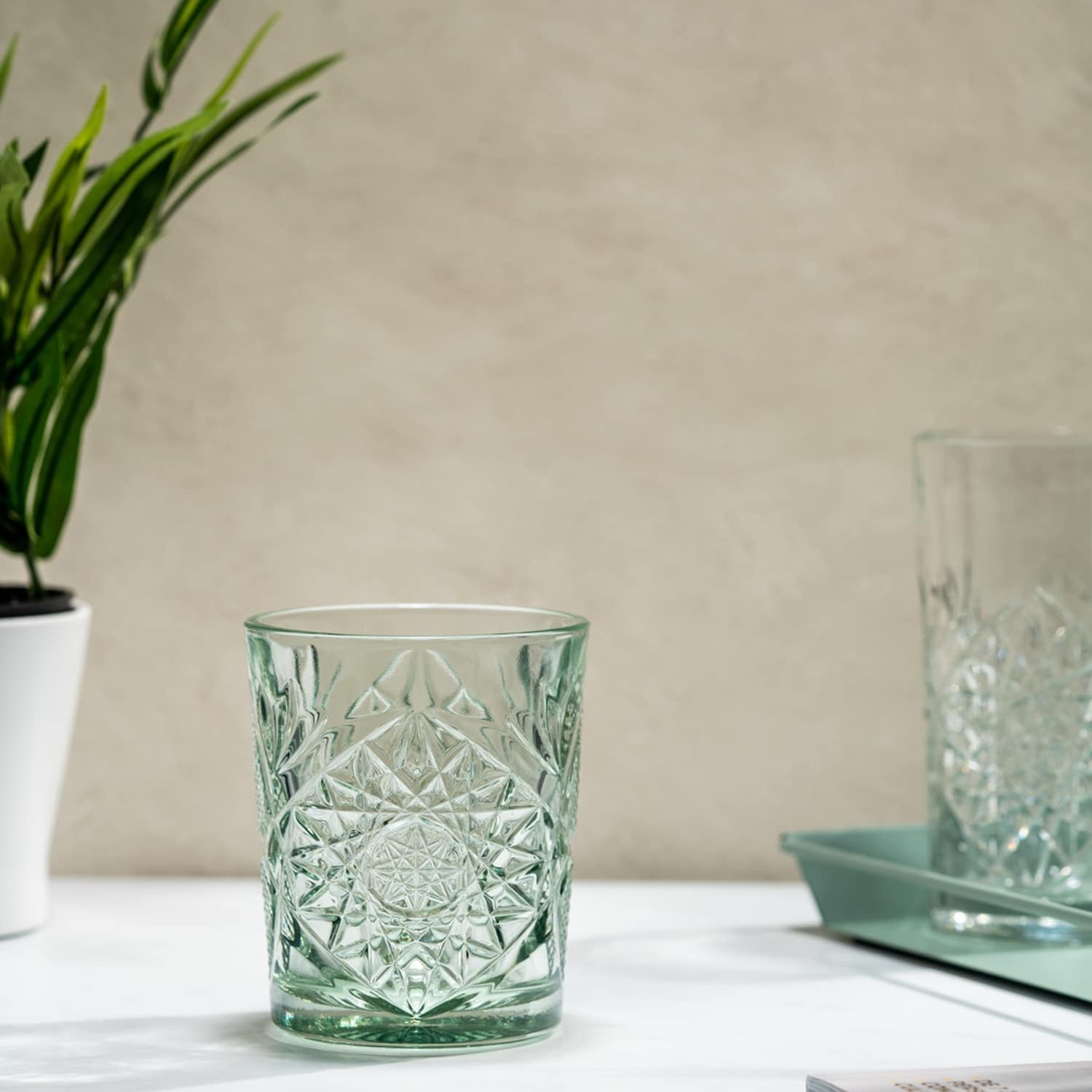
For a gin and tonic, you want a large glass that can hold plenty of ice; for a Martini, a small glass that stays ice-cold. These are the glasses we recommend ourselves.


Everything else you wanted to know about gin
Is your question not listed? View our cocktail recipes or get in touch.
To the cocktail recipes →