






How to pour
a port in
Bring the bottle to the right temperature. Red port should be served at 12 to 16 degrees; half an hour in the refrigerator takes just enough of the room temperature off. Serve white port colder, around 8 to 10 degrees, and it can stay in the refrigerator longer. Too warm makes the alcohol stand out, while too cold masks the fruit.
Remove the capsule and open the bottle. Tawny and ruby usually have a stopper that you can pull out by hand, allowing you to close the bottle again afterwards. A vintage has a long cork that has been driven in; use a corkscrew for this, and a two-pronged model for an old cork.
Only a vintage needs a decanter. This port has aged in the bottle for years without being filtered and forms sediment. Leave the bottle upright for a day, then slowly pour it into the decanter and stop as soon as you see the cloudy layer approaching the neck. Ruby, LBV and tawny can be poured straight from the bottle.
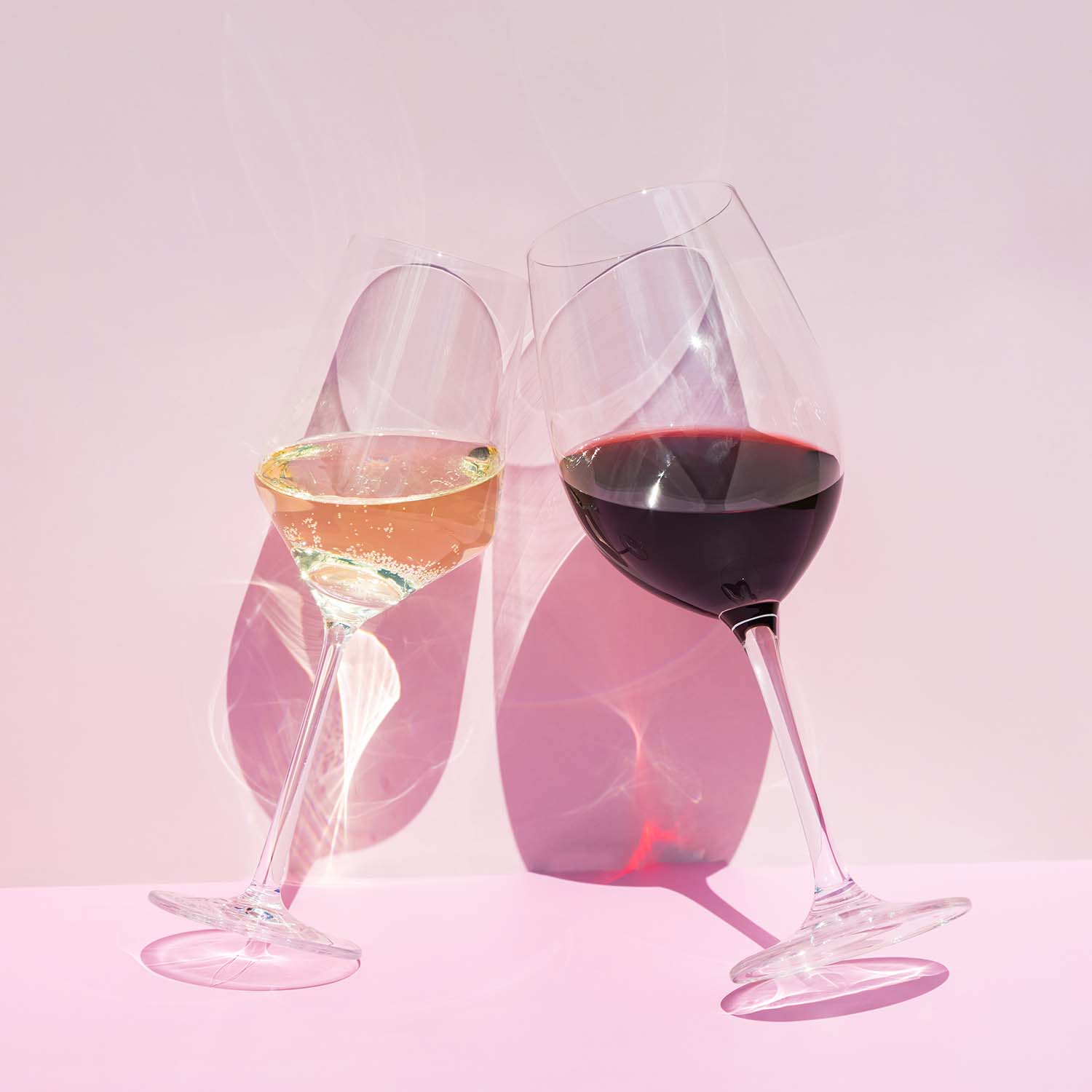
Pour 6 to 8 cl into a small stemmed glass, filling it about halfway. This keeps the serving in proportion to the higher alcohol content and leaves room for the aroma. Then close the bottle and store it upright in a cool, dark place.
What did you think of this guide?
One click on a star is enough. If you’d like to add something, we’ll read it first before it appears here.
Save this page
Send this page to your own email, so you have the explanation at hand when you start pouring. You will also receive a € 5 discount code on orders from € 50, for the glasses that go with it.
The story
The Douro flows through northern Portugal, and the vineyards there lie on steep terraces of flaky slate. It is a warm, dry region where the grapes build up plenty of sugar. That sweetness is exactly what makes port: during fermentation, wine spirit is added, the yeast stops working, and some of the grape sugar remains in the wine. Then comes the second choice, and it determines everything. Does the wine go into the bottle after a short period in cask, or does it remain on wood for years with exposure to air? All the styles you see in the shop come from that one fork in the road.
The right glass
Port is served in portions of 6 to 8 cl, so a small stemmed glass is the right size. A bowl that narrows slightly toward the top keeps the sweet and woody notes together, while the higher alcohol can escape above the wine. There is a dedicated category for this: all models are listed under port glasses, and smaller bowls can also be found under liqueur glasses. If you have a vintage with sediment, it should be served with a decanter from the decanters collection. Both glasses below mention port and sherry in their own product descriptions.

Royal Leerdam Bouquet Port Glass / Sherry Glass 14 cl (6 pieces)

Chef & Sommelier Cabernet Port Liqueur Glass 12 cl (6 pieces)
Both sets together € 47,40.
The right tools
For a port, you need little besides the glass: with a zester, you pull a strip of orange peel for a port tonic, and an ice cube mold makes the large cubes that slowly melt in that long glass. These are the bar tools we use ourselves; you can find everything in our bar tools & cocktail sets.


Glass set (our choice 01) + 2 bar tools together € 57,85.


Variations & twists
Ruby is the young, fruity base and matures mainly in the bottle; reserve ruby is a fuller selection, while late bottled vintage comes from a single vintage and goes into the bottle after a few years in the barrel. Vintage is the top version of that range: briefly aged in the barrel, then for years in the bottle, and therefore not oxidative. Tawny takes the other route and spends years in small barrels with exposure to air; the designation 10, 20, 30 or 40 years refers to the average age of the blend, and a colheita is a tawny from a single vintage. White port is made from white grapes and ranges from dry to sweet. Read more? View all drinks and brands.
Serving tip
Red port is served at 12 to 16 degrees, while white port is served colder, around 8 to 10 degrees. Let a vintage stand upright for a day, then carefully pour it into a decanter until the sediment reaches the neck. Only open a ruby or a vintage when you will finish it within a few days; a tawny can simply be kept in the cupboard, as it has already undergone oxidation.
Good to know
How port is made
The grapes come from the Douro and are fermented there. Partway through fermentation, wine alcohol is added: a neutral grape spirit. The yeast can no longer continue working at the higher alcohol level and stops, leaving some of the grape sugar in the wine. This creates a wine that is both sweet and strong: roughly 19 to 22 percent alcohol. For red port, the best-known grapes are Touriga Nacional, Touriga Franca, Tinta Roriz, Tinta Barroca and Tinto Cão. Aging then begins, and that determines which style it becomes.
The two families: in the bottle or in cask
This is the most useful distinction to remember. The first family matures largely in the bottle: ruby, reserve ruby, late bottled vintage and vintage. Very little air enters the bottle, so these styles remain dark red and fruity and are specifically not oxidative. The second family matures in cask: tawny and colheita spend years in small casks where they are exposed to air. As a result, they turn reddish-brown and the flavor shifts from red fruit to nuts, caramel and dried fruit.
What ruby, LBV and vintage mean
Ruby is the entry-level style: a blend of young vintages, aged for a few years in large casks and then bottled, with red fruit as its main note. Reserve ruby is the same style made from a better selection. Late bottled vintage comes from a single vintage and remains in cask longer than a vintage before being bottled; many LBVs are filtered and therefore do not need decanting. Vintage comes from a single vintage, is bottled unfiltered after a short period of cask aging, and continues to mature in the bottle for years. It develops sediment.
What tawny 10, 20, 30 or 40 years means
With a tawny, the number does not indicate a vintage year but the average age of the wines in the blend. A 20-year-old tawny is therefore made from younger and older casks that together average around that age. The higher the number, the more the color shifts toward amber and the more pronounced the notes of nuts, caramel and figs become. A colheita is the exception: it is a tawny from a single vintage, with that year on the label.
White port and the port tonic
White port is made from white grapes and ranges from dry to sweet. It is often served as an aperitif, usually chilled to around 8 to 10 degrees. The best-known way to serve it is as a port tonic: one part white port with two or three parts tonic, in a large glass with plenty of ice, garnished with a slice of orange or a sprig of mint. A dry white port works best for this, because the tonic is already sweet.
What to eat with it
Blue cheese is the classic pairing with a vintage or a ruby: the saltiness of the cheese and the sweetness of the wine balance each other. Dark chocolate works with the same styles, as the red fruit counters the bitterness of cocoa. Tawny is better paired with nuts, almond pastries, caramel and dried figs, as those flavors are also present in the wine itself. White port is served before the meal, with olives and almonds.
Frequently asked questions
What is port?
Port is fortified wine from the Douro in northern Portugal. Halfway through fermentation, grape spirit is added, stopping the yeast and leaving some of the grape sugar in the wine. This makes port both sweet and strong, at roughly 19 to 22 percent alcohol. It then ages in the bottle or in cask, which determines the style.
What is the difference between ruby and tawny port?
Ruby ages briefly in a large cask and then in the bottle, where virtually no air reaches it; it remains dark red and fruity. Tawny ages for years in a small cask exposed to air, causing it to turn reddish-brown and develop flavors of nuts, caramel and dried fruit. For a tawny, 10, 20, 30 or 40 years indicates the average age of the blend.
How long does an opened bottle of port keep?
That varies by style, and the reason is aging. A tawny has already aged with air for years, so it remains good for weeks to months after opening. A ruby lasts about a week. A vintage is the most delicate, because it has aged in the bottle without air: ideally, serve it within a few days. Store the bottle closed, upright, cool and dark.
At what temperature do you serve port?
Red port at 12 to 16 degrees, so slightly below room temperature; half an hour in the fridge is enough. Serve white port colder, around 8 to 10 degrees. A 6 to 8 cl pour in a small stemmed glass keeps the serving size in proportion to the higher alcohol content.
Also delicious
Everything for your bar,
to one address
Glasses in hospitality quality, supplied per set. Order today, delivered quickly.
Shop the glasses →