



How to pour
a NEIPA in
Rinse the glass with cold water and shake it out without drying it. Grease and soap residue flatten the head, while a wet surface helps keep it looking good. Take the bottle out of the refrigerator fifteen minutes before pouring: at 7 to 10 degrees, the fruit comes through; ice-cold, you will smell very little.
Hold the glass at an angle, approximately forty-five degrees, and gently pour the beer against the side until the glass is more than half full. A NEIPA often foams eagerly, so keep the bottle close to the rim and do not pour too quickly. You will see the haze immediately: that is how it should be and is not a fault in the bottle.
Set the glass upright and pour in the rest from a little higher, into the middle of the beer, so that you build a collar of two to three centimetres. Pour the bottle completely for this style, including what is on the bottom: that yeast and those hop particles are exactly what give it its soft, full mouthfeel.
Leave the collar in place: it seals the glass and holds in the aroma. Smell it first and give the beer two minutes before tasting, so the temperature rises just enough. It is better to drink a NEIPA quickly than slowly over an evening, because the aroma that makes it worthwhile visibly disappears from the glass.
What did you think of this guide?
One click on a star is enough. If you would like to add something, we will read it first before it is posted here.
Save this page
Send this page to your own email, so you have the instructions at hand when you are about to pour. You will also receive a €5 discount code on purchases from €50, for the appropriate glasses.
The story
The style originated in the northeastern United States, where around the beginning of the 2010s, brewers deliberately toned down the bitterness of the classic IPA and focused entirely on hop aroma. They used plenty of wheat and oats for a fuller mouthfeel, yeast strains that produce fruity esters and flocculate poorly, and large quantities of hops added to the beer only after fermentation. The result was hazy, and it stayed that way, first to people’s surprise and later as a defining characteristic. By now, half of Europe brews the style, including quite a few Dutch and Belgian breweries.
The right glass
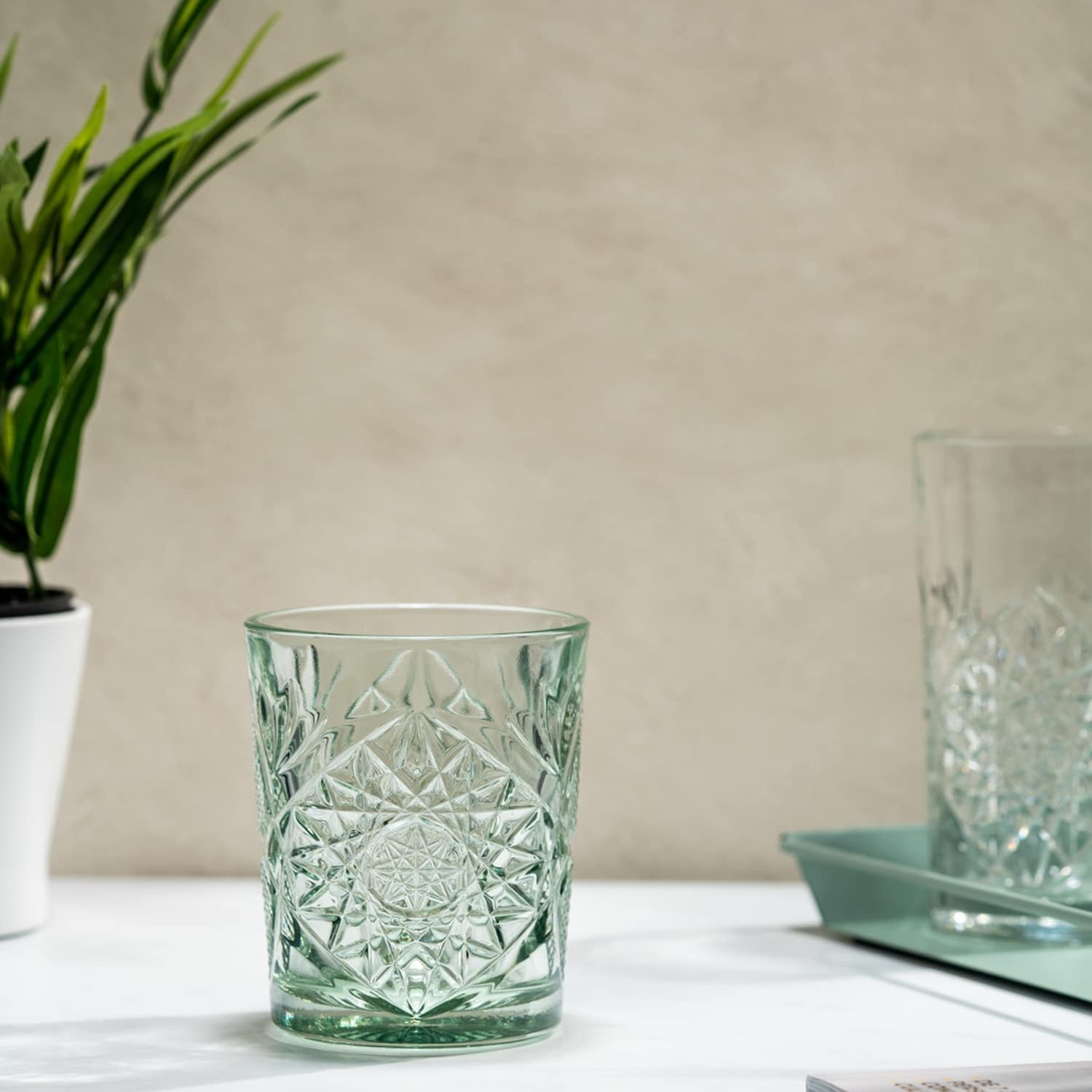
A NEIPA is all about aroma, and you retain aroma with a bowl that narrows towards the top. A stem helps with that: your hand stays away from the beer, so a freshly poured glass stays cold. Our first choice tapers slightly towards the top and does exactly that. The second glass has a wider bowl, so it concentrates the aroma less tightly, but it shows off the hazy color and head better. You can find even more bowl shapes among the specialty beer glasses.

Lehmann Craft Beer Glass 44 cl (6 pieces)

Arcoroc Cervoise Beer Glass 38 cl (6 pieces)
Both sets together € 96,90.
The right tools
For a NEIPA, you do not need any bar tools, just a chilled, rinsed glass and a fresh bottle. What we do put alongside it when there is more on the table is a citrus juicer and a set of cocktail picks for the snacks. These are the bar tools we use ourselves; you can find everything in our bar tools & cocktail sets.


Glass set (our choice 01) + 2 bar tools together € 106,85.
Which spirit goes with this?
With a NEIPA, the beer itself takes center stage, so there is no need for anything strong alongside it. If you are still looking for something with a similar fruity character, liqueur is the obvious choice, such as limoncello or amaretto. On each drinks page, you can find the alcohol percentage, what it tastes like, which cocktails it works well in and which glass you need.


Variations & twists
Within the style, you can go in any direction. A session version keeps the fruit character at a lower alcohol percentage, a double NEIPA is roughly between 8 and 9 percent and fuller-bodied, and a milkshake IPA adds lactose and fruit purée, making the whole thing even fuller and sweeter. Those looking for the clear, dry and bitter side will end up with a West Coast IPA: the same ingredients, a different order. Want to read more? View all drinks and brands.
Serving tip
Serve a NEIPA at 7 to 10 degrees, not colder, because ice-cold beer releases hardly any aroma, and that is exactly what this style is about. Choose the freshest bottle or can you can find and check the date. Pour it all at once and let the bottle empty completely, including the sediment at the bottom.
Good to know
Why a NEIPA is hazy
Three things at once. Wheat and oats in the mash contribute proteins and beta-glucans that scatter light. The yeast strains used flocculate poorly and therefore remain suspended. And the large amount of hops added after fermentation leaves behind fine particles that bind to those proteins. The haze is therefore intentional, not a fault in the bottle.
Dry hopping: hops after fermentation
Hops that are boiled mainly provide bitterness, because alpha acids only isomerize at high temperatures. Hops added cold to the beer after fermentation, known as dry hopping, provide almost only aroma. A NEIPA gets most of its hops in this cold way, sometimes in two or three rounds. This adds plenty of aroma without increasing the bitterness.
Lots of hops, yet hardly any bitterness
Bitterness arises through the isomerization of alpha acids during boiling. If there is no boiling, that conversion largely does not occur, no matter how much hops goes in. On top of that, oats and wheat, with their full mouthfeel, soften whatever bitterness there is. As a result, the measured IBU often remains low even though the amount of hops is high.
The difference from a classic IPA
Put them side by side and you see it immediately: clear versus cloudy, and dry and angular versus full and soft. The classic IPA builds its bitterness during the boil and finishes dry; the NEIPA moves virtually all the hops to after fermentation and finishes creamy and fruity. Both have a similar alcohol level, roughly 6 to 8 percent for a regular NEIPA. The same ingredients, a different order.
Past its peak even faster
A NEIPA deteriorates faster than a regular IPA, and that was already sensitive. The large amount of aroma hops oxidizes quickly, the color shifts from yellow-brown to duller brown, and the fruit gives way to a cardboard note. So buy it as fresh as possible, store it cold and dark, and think in weeks rather than months.
Frequently asked questions
What is a NEIPA?
NEIPA stands for New England India Pale Ale, a cloudy variant of IPA from the northeastern United States. It is soft and full-bodied, clearly fruity on the nose and barely bitter, because virtually all the hops are added only after fermentation.
Why is a NEIPA cloudy?
Because of the wheat and oats in the mash, which bring proteins, yeast strains that remain in suspension, and the fine hop particles from dry hopping. Together, these three scatter the light. The cloudiness is part of the style and says nothing about the quality of the bottle.
Why isn't a NEIPA bitter even though it contains a lot of hops?
Bitterness only develops when alpha acids from the hops isomerize during boiling. In this style, most of the hops are added cold, after fermentation, so that conversion largely does not occur. You get the aroma, but hardly any bitterness.
How long does a NEIPA keep?
Shorter-lived than any other hoppy style. The aroma that makes it worthwhile oxidizes quickly, especially in heat and light. Buy it as fresh as possible, store it cold and dark, and preferably drink it within a few weeks to at most a few months.
Also delicious
Everything for your bar,
to one address
Glasses in hospitality quality, supplied per set. Order today, delivered quickly.
Shop the glasses →