



How to pour it
a bock beer in
Rinse the glass with cold water and leave it wet. The head adheres better to a wet, cool glass, while grease or soap residue makes it collapse immediately. So don’t dry the glass with a tea towel.
Hold the glass at an angle of about forty-five degrees and pour gently against the inside wall. Pour continuously without stopping, because every interruption produces coarser foam. Don’t let the bottle touch the rim of the glass.
Stand the glass upright once it’s about two-thirds full and pour the rest into the center of the beer. That’s where the head builds up. Two centimeters of beige foam above the dark beer is a good measure.
Let the head settle before you start; with a malty beer, it subsides more slowly than with pilsner. Serve bock beer at 8 to 12 degrees, not straight from the refrigerator, otherwise you’ll barely taste the caramel and bready notes.
What did you think of this explanation?
One click on a star is enough. If you’d like to add something, we’ll read it first before it appears here.
Save this page
Send this page to your own email so you have the information at hand when you’re ready to pour. You’ll also receive a €5 discount code for orders from €50, for the glasses that go with it.
The story
The name bock goes back to Einbeck, a town in Lower Saxony that was known for its beer in the late Middle Ages and sold it far beyond the town. When the style was copied in Bavaria, Einbeck was corrupted in everyday speech to Beck and then to Bock. That is the commonly accepted explanation for the name, and also the reason a goat appears on so many labels: the German word Bock also means buck. In the Netherlands, bock beer later developed its own identity as a dark autumn beer, while Bock in Germany remained a family of strong beers that can also be pale.
The right glass
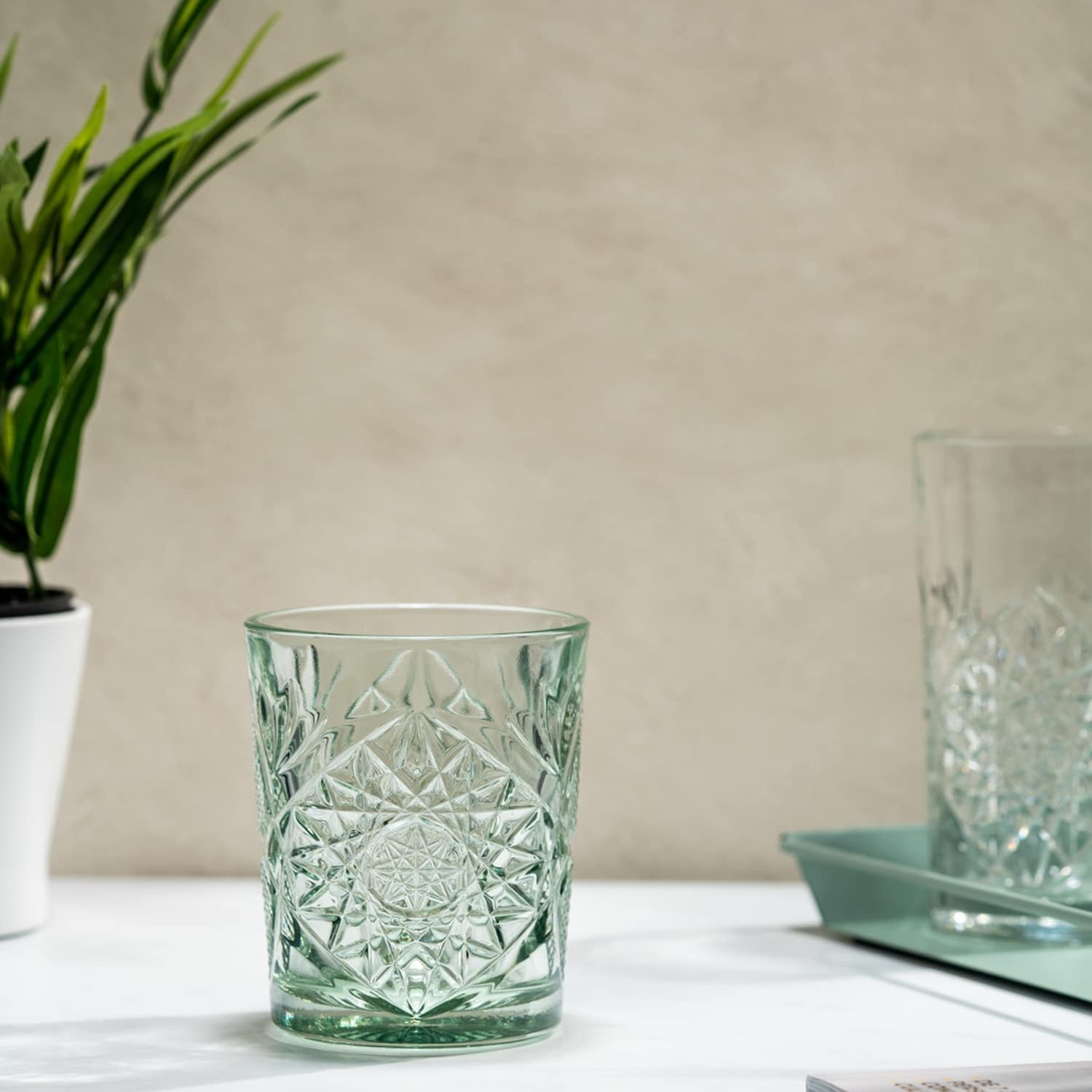
Bock beer is best enjoyed in a round glass or a tulip: a broad bowl that retains the malt aroma and a slightly narrower rim that keeps the beige head together. A glass of around 40 centilitres gives a 30 cl bottle plenty of room. A dedicated bock glass as a separate model is not part of our range; these are the two models that come closest. The wider bowls are in the specialty beer glasses collection.

Bormioli Rocco Beer Club beer glass 53 cl (6 pieces)

Royal Leerdam Beer Specials beer glass 40 cl (6 pieces)
Both sets together € 58,90.
The right tools
For a bock beer, you need little besides the glass; this is what we have on the same table: a bar spoon for gently stirring without knocking out the carbonation and cocktail picks for the cheese or sausage served alongside. These are the bar tools we use ourselves; you can find everything in our bar tools & cocktail sets.


Glass set (our choice 01) + 2 bar tools together € 74,85.
Which strong spirit goes with this?
The beer itself takes center stage; these drinks sit alongside it here in autumn. A small glass of genever or beerenburg complements the malty, spicy side of a bock. On every drinks page, you can read the alcohol percentage, what it tastes like, which cocktails it pairs with and which glass you need.


Variations & twists
In addition to autumn bock, the Netherlands has spring bock, a lighter and blonder beer that appears in spring and is closer to German Maibock. In Germany itself, Bock is a family: Maibock is the blonde spring variant, Doppelbock is heavier and maltier, and Eisbock is made stronger by partially freezing the beer and removing the ice. Dutch autumn bock is roughly 6 to 7 percent ABV; the German variants reach higher levels. Want to read more? View all drinks and brands.
Serving tip
Serve bockbier at 8 to 12 degrees. Too cold, it masks the caramel and bready notes, leaving mainly carbonation. Take the bottle out of the refrigerator half an hour before serving and let the head settle for a moment before taking the first sip.
Good to know
Dutch bockbier versus German Bock
In the Netherlands, bockbier is a dark, malty autumn beer of around 6.5 percent ABV that appears from the end of September. In Germany, Bock is not a seasonal beer but a family of strong beers, including Maibock, Doppelbock and Eisbock, and that family can also be blonde. The same word therefore covers two different meanings.
Where the name comes from
The common explanation is that the name goes back to Einbeck in Lower Saxony, a city known for its beer in the late Middle Ages. When the style was replicated in Bavaria, Einbeck became corrupted to Beck and then to Bock. The fact that the German word Bock also means goat explains the goat on many labels.
Spring bock
Besides autumn bock, there is spring bock, which appears in spring. It is lighter in colour and flavour, making it closer to German Maibock than to dark autumn beer. The same word, bock, a different beer in the glass.
Where the flavour comes from
The colour and flavour mainly come from the malt. Darker-dried and roasted malts give the beer its brown to reddish-brown colour and notes of caramel, bread and toast. Hops play a smaller role than in lager, making bock beer feel softer and fuller and less bitter.
How much alcohol bock beer contains
Dutch autumn bock is roughly between 6 and 7 percent, often around six and a half. The German varieties go higher, especially Doppelbock or Eisbock. The exact percentage is stated on the label.
Frequently asked questions
What is bock beer?
In the Netherlands, bock beer is the dark, malty autumn beer that appears from late September, usually around 6.5 percent. It tastes of caramel, bread and toast and is less bitter than lager. In Germany, Bock means something different: there it is a family of strong beers that can also be pale.
Where does the name bock beer come from?
The usual explanation is that the name goes back to Einbeck in Lower Saxony. When beer from that city was brewed in Bavaria, Einbeck was corrupted in everyday speech to Beck and then to Bock. The German word Bock also means billy goat, which explains the animal on many labels.
What is the difference between bock beer and spring bock?
Autumn bock is the dark, malty beer that appears from late September. Spring bock arrives in spring, is lighter in colour and flavour, and is closer to German Maibock. Both are called bock, but the beer in the glass differs.
Which glass should you serve bock beer in, and at what temperature?
In a round glass or a tulip glass of around 40 centilitres, so that a 30 cl bottle plus a two-centimetre head fits inside. The wide bowl retains the malty aroma. Serve at 8 to 12 degrees and not straight from the refrigerator.
Also delicious
Everything for your bar,
to one address
Glasses in hospitality quality, delivered as a set. Order today, delivered quickly.
Shop the glasses →