



The ristretto recipe
for your table
Grind eight grams of beans one or two settings finer than you would for an espresso, distribute the grounds evenly in the portafilter, and tamp them straight and with even pressure.
Briefly flush the group and warm the glass with hot water, then discard the water. Fifteen milliliters is so little coffee that a cold glass immediately draws heat from it.
Start the machine and keep an eye on the glass. Stop as soon as it contains about fifteen milliliters. With a finer grind, this takes twenty to twenty-five seconds; if you use the same grind as for espresso, it will be ready after about fifteen seconds.
Serve immediately, with a glass of cold water alongside, and drink it while the crema is still on top. Place the sugar beside it rather than in it, because a ristretto is naturally less bitter than an espresso.
What did you think of this recipe?
One click on a star is enough. If you'd like to add something, we'll read it first before it appears here.
Save this recipe
Send the ristretto recipe to your own email so you have it handy when you make it. You'll also receive a €5 discount code on purchases from €50, for the glasses that go with it.
The story
In Italian, ristretto means limited or shortened, referring to the water, not the coffee. You use the same dose as for an espresso and stop the machine halfway through. Coffee does not dissolve all at once: first the acids, sugars and oils are released, and only afterwards the compounds that taste bitter and dry. By stopping early, you mainly capture that first part. As a result, a ristretto is more syrupy and rounded than an espresso, with less bitterness in the finish, while it actually contains slightly less caffeine in absolute terms.
The right glass
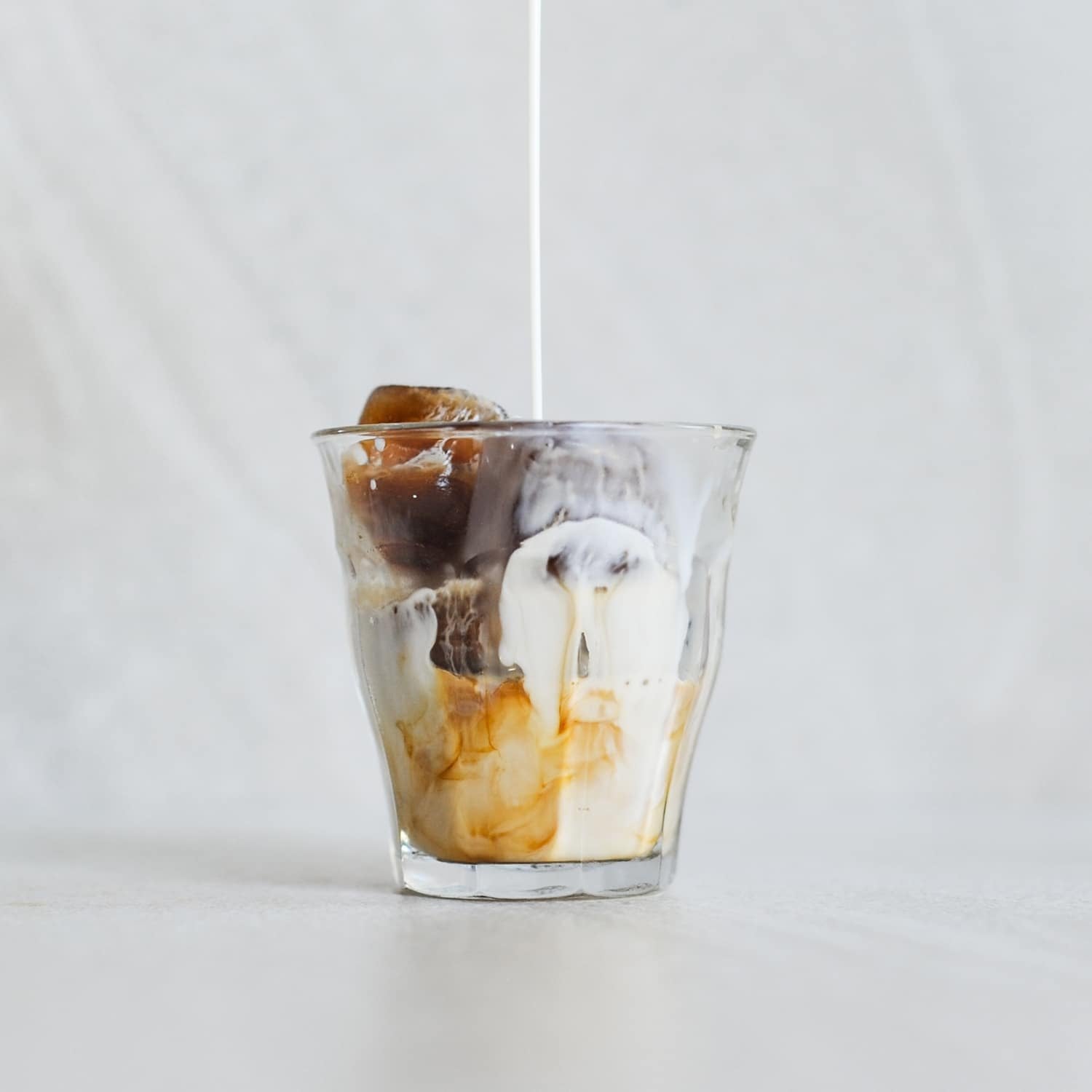
Fifteen millilitres in a large cup is no more than a thin layer on the bottom. A ristretto therefore belongs in the smallest glass you have, six to ten centilitres, preferably preheated. Glass has the advantage that you can see the crema: dense and hazelnut brown when the extraction was right, thin and pale when you were too fast or too coarse. A double-walled glass keeps that small amount at temperature the longest and remains warm to the touch on the outside; you can find them among the double-walled coffee glasses.

Luigi Bormioli Thermic Glass Espresso Glass 6.5 cl with Stainless Steel Saucer (2 pieces)

La Rochère Fleurs Espresso Glass 10 cl (6 pieces)
Both sets together € 44,40.
The right tools
For a ristretto, you need little besides the glass: a jigger, because the small 2 cl side shows just how little fifteen millilitres really is, and a grater for anyone who likes to serve grated dark chocolate alongside it. These are the bar tools we use ourselves; you can find everything in our bar tools & cocktail sets.


Glass set (our choice 01) + 2 bar tools together € 47,85.
What shot goes into a ristretto?
Without alcohol, a ristretto is simply coffee. Stir in a splash of liqueur or spirits and in Italy it is called a caffè corretto. Because there is so little coffee in the glass, you taste the splash immediately, so keep it small, around two centiliters. On each drink page, you can read the alcohol percentage, what it tastes like, which cocktails it suits, and which glass you need.


Variations & twists
An espresso is around twenty-five milliliters, while a lungo runs to forty or fifty and therefore also extracts the compounds that dissolve later, making it more bitter. If you double the dose and keep the volume short, it is called a doppio ristretto. Add a splash of spirits and it becomes a corretto. A ristretto is often the better base for milk drinks, because the coffee does not get lost. Looking for more inspiration? Browse more than 100 cocktail recipes.
Serving tip
Warm the glass with hot water and discard it before pulling the shot, because at fifteen milliliters every degree counts. Place a glass of cold water alongside it, and drink it before the coffee to cleanse your palate. Sugar belongs on the side, not in the coffee: taste it first to see whether you need it.
Good to know
The same coffee, half as much water
A ristretto starts with the same dose as an espresso, about eight grams for a single shot. The only difference is how much you let it run: around fifteen milliliters instead of twenty-five. The ratio therefore changes from about one to three to one to two.
Why it tastes fuller and less bitter
Coffee releases its compounds in sequence. The acids, sugars, and oils dissolve first; the compounds that taste bitter and dry come later. If you stop at fifteen milliliters, you mainly capture that first part and leave the bitter compounds in the coffee bed. This makes a ristretto rounder and thicker on the tongue, not stronger in the sense of being sharper.
How long it may run
That depends on your grind size. With the same grind as for espresso, fifteen milliliters is already in the glass after about fifteen seconds. If you grind one or two settings finer, it runs more slowly and takes twenty to twenty-five seconds. The second approach usually gives the fullest flavor because the water stays in contact with the coffee longer.
Caffeine: less than you think
Less water dissolves less caffeine, so in absolute terms a ristretto contains slightly less caffeine than an espresso made from the same dose. Per milliliter, it is more concentrated, which explains why it feels stronger than its caffeine content would suggest.
When to choose a ristretto
With dark-roasted beans that turn out too bitter as espresso, when you want a short, full sip instead of a longer coffee, and as a base under milk, for example in a macchiato or a cortado, because the coffee does not get lost. Choose a lungo instead if you want to take longer over it and don't mind a little more bitterness.
Frequently asked questions
What is a ristretto?
An espresso with the same amount of coffee but about half as much water: around fifteen milliliters instead of twenty-five. This makes it more concentrated, rounder, and less bitter.
How long should a ristretto take to brew?
With the same grind as for espresso, you get fifteen milliliters after just fifteen seconds or so. If you grind one or two settings finer, it runs more slowly and takes twenty to twenty-five seconds, which usually gives the fullest result.
Does a ristretto contain more caffeine than an espresso?
In absolute terms, slightly less, because less water passes through the same dose of coffee, so less caffeine dissolves. Per milliliter, however, a ristretto is more concentrated, which makes it feel stronger.
When do you choose a ristretto instead of an espresso or a lungo?
If your beans turn out too bitter, if you want a short, full sip, or if milk is added and the coffee must not get lost. Choose a lungo if you want to take longer over it and don't mind more bitterness.
Also delicious
Everything for your bar,
to one address
Glasses in hospitality quality, supplied per set. Order today, delivered quickly.
Shop the glasses →