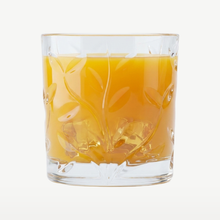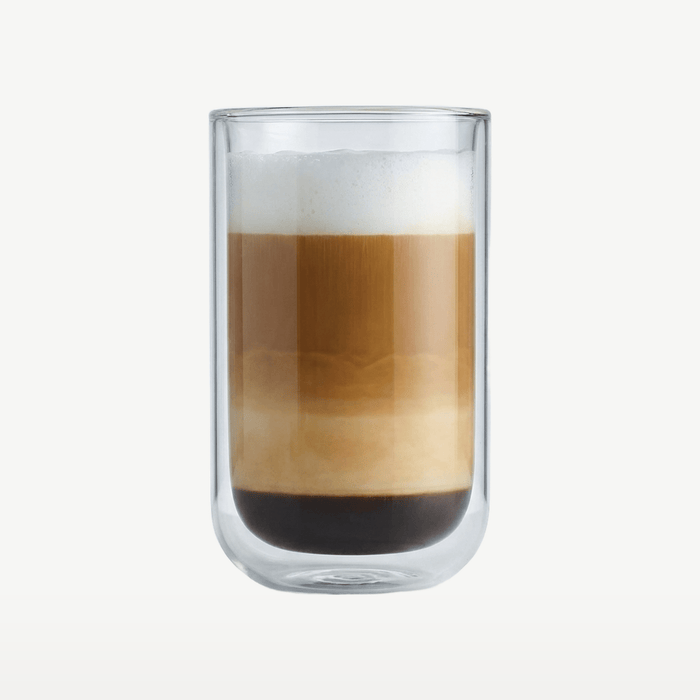
Luigi Bormioli Thermic Glass coffee glass 40 Cl Sublime Beverage - 2 pieces
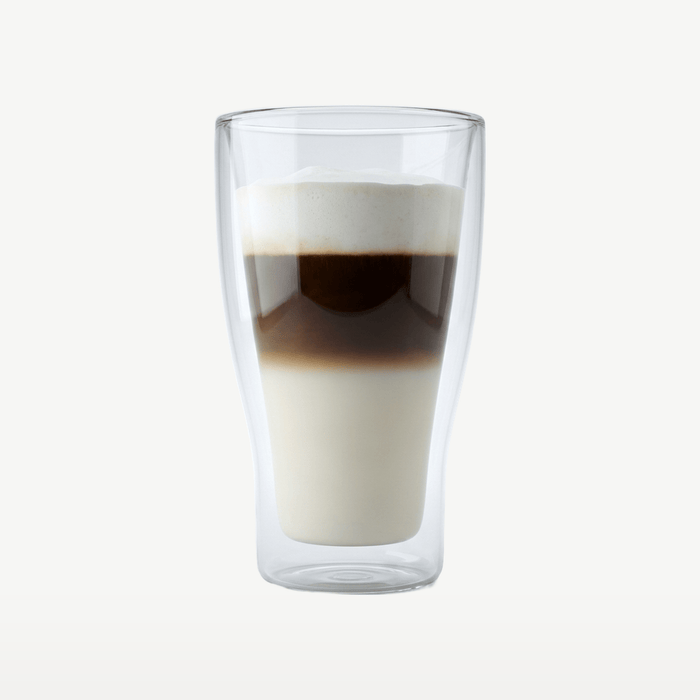
Luigi Bormioli Thermic Glass coffee glass 34 Cl Latte Macchiato - 2 pieces
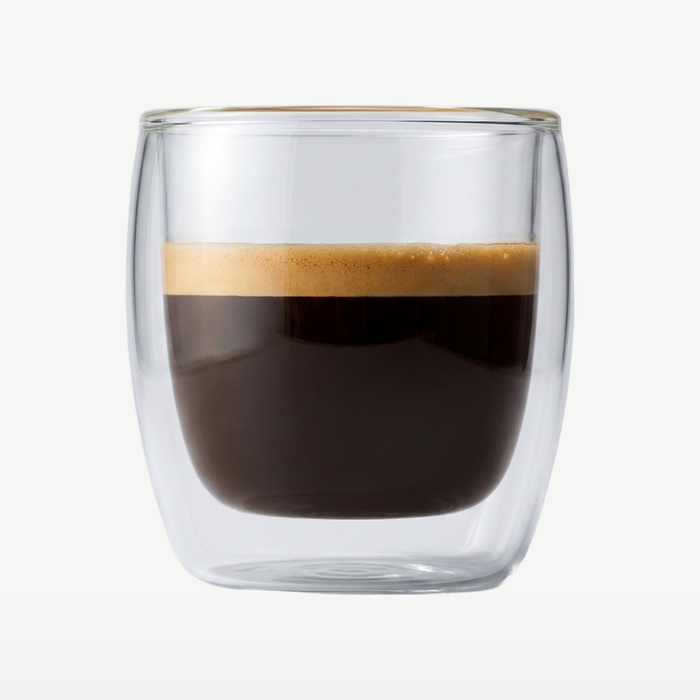
Luigi Bormioli Thermic Glass Coffee Glass 11 Cl Michelangelo - 2 Pieces
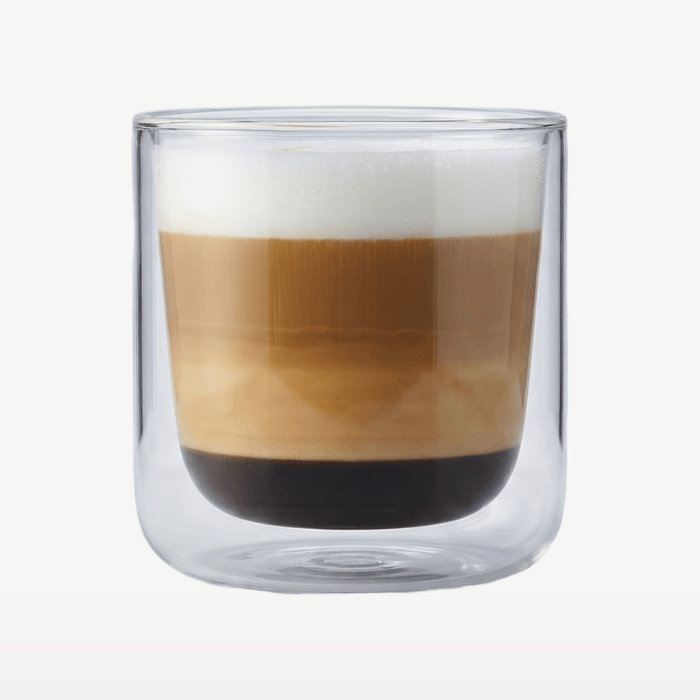
Luigi Bormioli Thermic Glass Coffee Glass 24 Cl Cylindrical - 2 Pieces

The cappuccino recipe
for your table
Warm the cup with hot water, pour it out, and pull a fresh 2.5 cl espresso into it, so the crema is still intact when you add the milk.
Froth the cold whole milk until it becomes microfoam: fine, glossy bubbles with no large bubbles, until the pitcher feels around sixty degrees. Don't let the milk boil, because above seventy degrees the foam collapses and the milk tastes cooked.
Give the pitcher a gentle tap on the counter, then swirl it so the milk and foam become one glossy whole, with no dry layer of foam floating on top.
Pour the milk into the center of the espresso from a few centimeters above, then move toward the edge as you finish. To make a caffè corretto, stir a splash of sambuca or amaretto into the coffee first; sprinkle with cocoa if desired.
What did you think of this recipe?
One click on a star is all it takes. If you’d like to add a comment, we’ll review it before it appears here.
Save this recipe
Send the cappuccino recipe to your own email so you have it handy when you’re ready to make it. You’ll also get a €5 discount code on orders over €50 for the glasses to go with it.
The story
The one-third espresso, one-third milk, and one-third foam ratio is what sets a cappuccino apart from its neighbors. In a 15- to 18-centiliter cup, that means one shot of espresso and the rest milk, about half of which is foam. A latte macchiato reverses the order: the milk goes into a tall glass first, and you pour the coffee through it so you can see the layers. Koffie verkeerd is the Dutch version, with lots of hot milk and hardly any foam. The same two ingredients, three different drinks.
The right glass
A classic cappuccino is served in a 15- to 18-centiliter cup, and if you prefer a larger serving, 22 to 24 centiliters is just right. A handle is essential: the cup gets hot, and you want to be able to pick it up without a cloth. Glass has one advantage over porcelain: you can see the three layers, so you can immediately tell whether your foam is right. A double-walled cup keeps the coffee warm for longer and stays warm to the touch on the outside; you can find one among the double-walled coffee glasses.

Bormioli Rocco Easy Bar Cappuccino Cup 22 cl (12 pieces)

Luigi Bormioli Thermic Glass Cappuccino Glass 24 cl Sublime Cappuccino (2 pieces)
Both sets together € 72,90.
The right tools
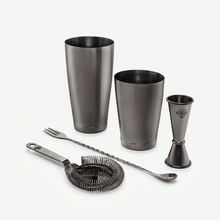
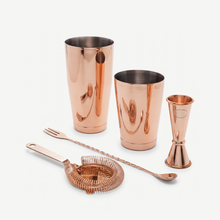
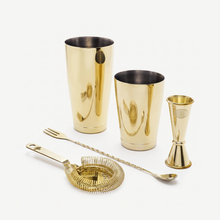
For a cappuccino, as well as a cup, you’ll need a nutmeg grater to grate cocoa or nutmeg over the foam, and a jigger to measure the splash of liqueur precisely. These are the bar tools we use ourselves; you’ll find them all in our bar tools & cocktail sets.


Glassware set (our pick 01) + 2 bar tools together € 72,85.
Which splash goes into a cappuccino?
Without alcohol, a cappuccino is simply coffee with milk. Add a splash of liqueur, and in Italy it’s called a caffè corretto. Traditionally, it’s made with sambuca or amaretto. Each drink page tells you the alcohol percentage, what it tastes like, which cocktails it goes with, and which glass you need.


Variations & twists
Sprinkle cocoa or grated dark chocolate over the foam, or use cinnamon for a warmer flavor. Add a splash of sambuca or amaretto to the espresso to make a caffè corretto. A cappuccino scuro has more coffee and less milk, while a cappuccino chiaro is the opposite. Semi-skimmed milk is easier to froth into a tall, dry layer; whole milk produces less volume but creamier microfoam, which is what you need for latte art. Looking for more inspiration? Browse over 100 cocktail recipes.
Serving tip
Serve the cappuccino right away, because the foam and coffee start to separate within a few minutes. Serve it with a spoon instead of a straw: you drink it through the foam. In Italy, people drink it at breakfast, not after a meal, but that’s a custom, not a rule.
Good to know
One-third, one-third, one-third
The classic ratio is one-third espresso, one-third warm milk, and one-third foam. In a sixteen-centiliter cup, that’s roughly one 2.5 cl shot of espresso, about 6 cl of liquid milk, and 6 cl of foam on top. You don’t pour the milk and foam in separately, though: you froth the milk all at once and pour it in as a whole.
Why the milk must not boil
Milk foams best between fifty and sixty-five degrees. Above that, the proteins that hold the bubbles together clump, the foam collapses, and the milk takes on a cooked flavor. Without a thermometer, you can tell by touching the pitcher: once you can’t hold your hand around it anymore, it’s ready. You can’t properly froth milk again once it’s already been heated.
Which milk foams best
Whole cow’s milk makes the creamiest microfoam, while semi-skimmed milk gives more volume but a drier layer. Always start with cold milk straight from the fridge, so you have more time before it reaches sixty degrees. Among plant-based milks, soy milk foams the most firmly; oat milk labeled barista also works well, while almond milk stays thin.
Cappuccino, latte macchiato, or koffie verkeerd
A cappuccino is coffee with equal amounts of milk and foam, served in a cup. A latte macchiato is served in a tall glass, with the milk poured in first and the coffee added afterward, so you can see the layers. Koffie verkeerd is Dutch: lots of hot milk in the coffee and very little foam. They have similar ingredients, but the proportions and order are different.
Latte art: what you need
For a heart or a rosette, you need glossy microfoam that flows from the pitcher like wet paint. Large bubbles or a dry cap of foam won’t leave a pattern. First pour from a height into the center to break the crema, then lower the spout to the surface and, at the end, move through your design to the other side.
Only in the morning?
In Italy, cappuccino is a breakfast drink, and people order an espresso after a meal. The idea is that a cup of milk sits heavily on the stomach after eating. It’s a custom, not a rule: at home, you decide what time it is.
Frequently asked questions
How much espresso and milk go into a cappuccino?
Allow for one 2.5 cl shot of espresso and about 12 cl of whole milk, frothed to roughly double its volume. In a fifteen- to eighteen-centiliter cup, that gives you the classic ratio of one-third coffee, one-third milk, and one-third foam.
How hot should the milk be for a cappuccino?
Around sixty degrees, and definitely below seventy. Above that, the foam collapses and the milk tastes cooked. Without a thermometer: froth until you can no longer hold the jug, then stop immediately.
What glass do you use for a cappuccino?
A heat-resistant cup with a handle. Traditionally, it holds fifteen to eighteen centiliters; if you like a generous pour, twenty-two or twenty-four centiliters works better. Glass has the advantage of letting you see the three layers, so you can tell right away whether your foam is right. A double-walled cup keeps the coffee warm longer and stays comfortably warm to the touch on the outside.
What’s the difference between a cappuccino and a latte macchiato?
The order and the ratio. For a cappuccino, the espresso goes into the cup first, then you pour in the frothed milk, with equal parts milk and foam. For a latte macchiato, the milk goes into a tall glass first, then you let the coffee sink through it, with much more milk than coffee.
Also delicious
Everything for your bar,
to one address
Hospitality-grade glasses, sold in sets. Order today, delivered fast.
Shop for glasses →