




The guacamole recipe
for your table
Halve the avocado, remove the pit, and scoop the flesh into a bowl. Mash it with the back of a fork into a coarse mixture in which you can still see pieces. Don’t use a stick blender or food processor: they separate the oil from the avocado, leaving you with a smooth, spreadable mush.
Finely chop the red onion, cut the green pepper into small pieces, and let them sit together in the lime juice for five minutes. The acidity takes the sharpest edge off both, so they won’t overpower the avocado later.
Cut the tomato open, spoon out the seeds and liquid, and cut only the firm flesh into small cubes. That liquid is why guacamole collapses after half an hour and becomes watery on the board.
Stir the onion, pepper, lime juice, and tomato into the mashed avocado and season with salt. Chop the coriander now and stir it in last, because the longer it sits, the darker it becomes and the less you’ll taste it.
What did you think of this recipe?
One click on a star is enough. If you’d like to add something, we’ll read it first before it appears here.
Save this recipe
Send the guacamole recipe to your own email so you’ll have it at hand when you’re ready to make it. You’ll also receive a €5 discount code on purchases from €50 for the glasses that go with it.
The story
Guacamole belongs to Mexican cuisine and has traditionally been made there in a molcajete, a heavy volcanic-stone mortar in which the avocado is pounded with salt and lime. That mortar crushes rather than grinds, and you can taste exactly that difference in the texture. A fork at home does the same job. What else goes in varies by region and household: tomato, onion, green pepper and cilantro are common, but the essentials are always avocado, lime juice and salt. Everything after that is a matter of taste, which is why no recipe has the final word.
The right glass
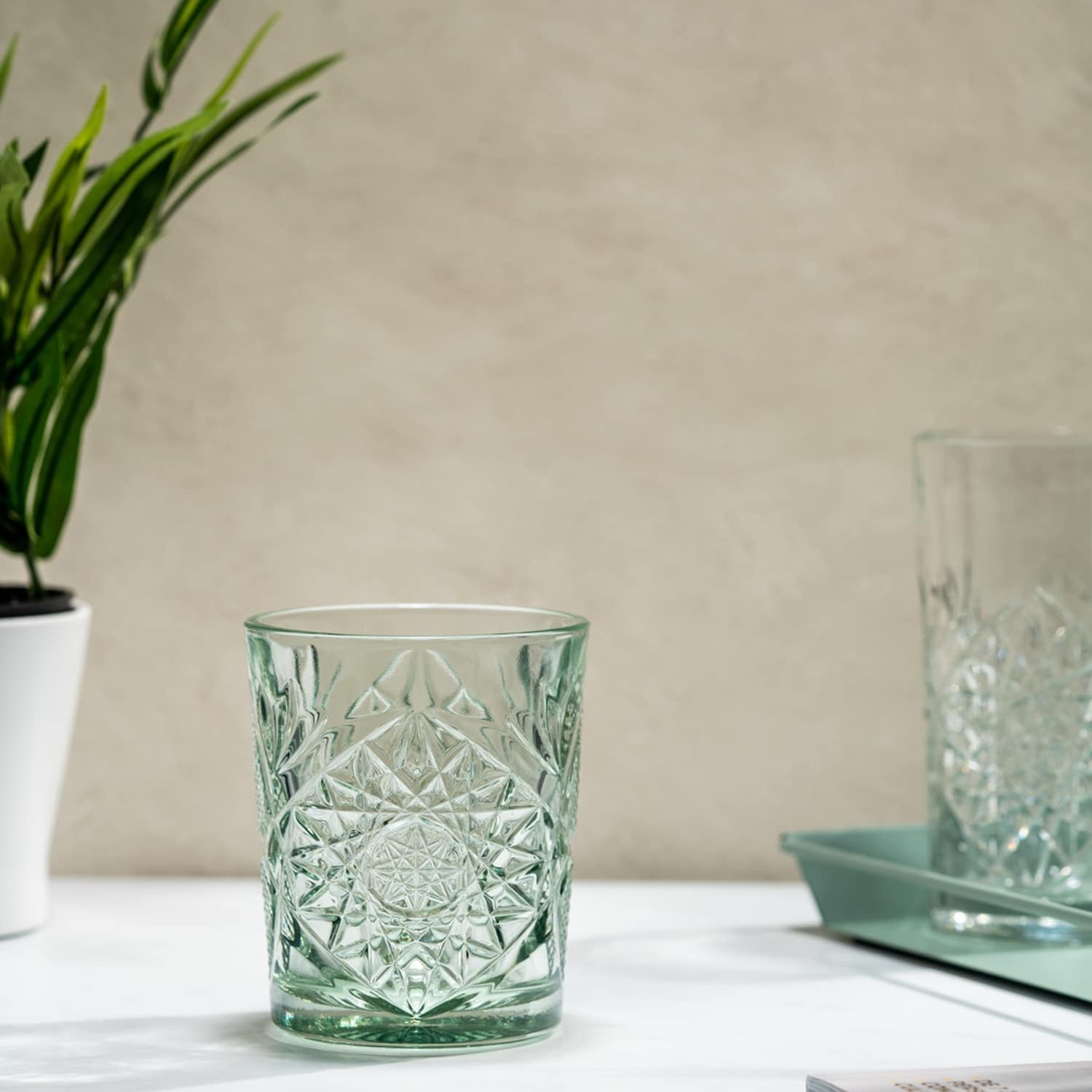
Guacamole in a large bowl on the table runs into two problems: everyone dips into the same bowl, and the surface exposed to the air turns brown. With an individual glass for each guest, you avoid both. An amuse bowl of around 8 centiliters is the right size for this, because a tortilla chip stands upright in it and the portion is gone before it can discolor. If you still want to serve it in the center of the drinks board, choose a wide, low coupelle of around 18 centiliters and smooth the surface so as little air as possible can reach it. More small sizes can be found among the drinks glasses.

La Rochère Folies Amuse Bowl 8 cl (6 pieces)

La Rochere Coupelle 18 cl Alice (6 pieces)
Both sets together € 47,90.
The right tools
For guacamole, besides the glass, use a citrus juicer to squeeze the lime without the seeds getting in, and a muddler to muddle the onion and pepper into that juice; mash the avocado itself with an ordinary fork. These are the bar tools we use ourselves; you can find everything in our bar tools & cocktail sets.


Glass set (our choice 01) + 2 bar tools together € 53,85.
What will you pour alongside it?
Guacamole is rich and fatty with a sharp edge, so you want something dry or something acidic alongside it. Tequila is the obvious choice, neat from a small glass or in a margarita, with Don Julio and Patrón as well-known bottles. At the table, cava, prosecco and a fresh white wine work just as well. On every drinks page, you can read the alcohol percentage, what it tastes like, which cocktails it works in and which glass you need.


Variations & twists
A clove of pressed garlic makes it heavier and less fresh; only add it when serving it with grilled meat. Diced mango or pomegranate seeds add sweetness to balance the sourness and look beautiful in a glass. Not everyone tastes cilantro the same way, so feel free to leave it out and use flat-leaf parsley or extra lime instead. And if you really want it spicy, replace the green chili pepper with a small piece of habanero, but remove the membranes first. Looking for more inspiration? Browse more than 100 cocktail recipes.
Serving tip
Make the guacamole no more than an hour in advance and cover it with plastic wrap placed directly on the surface, not stretched tightly over the bowl. Spoon it into small glasses just before serving and stand a tortilla chip upright in each one, so you don't need cutlery. On a drinks platter, serve it with a bowl of chips, strips of bell pepper, and a lime wedge.
Good to know
Mash or blend?
Mash it with a fork. A blender or food processor turns the avocado into a smooth paste in seconds, releasing air and oil in the process; what you end up with is more like a spread than guacamole. It's precisely the uneven chunks that make each bite taste different. If you want to do it faster, use a potato masher or a mortar, but don't chop through it with them.
How can you tell whether an avocado is ripe?
Don't remove the stem or squeeze the flesh, because squeezing causes brown spots - and the next customer will get them too. Hold the avocado in your hand and gently press just below the stem end: if that spot gives slightly, it's ripe. If it's still firm there, leave it on the counter for a day or two; placing it next to a banana speeds things up.
Why does guacamole turn brown?
Due to oxygen. As soon as the flesh is exposed, it reacts with the air and the surface turns brown; the flavor barely changes, it just doesn't look very appealing. Lime juice slows it down, and plastic wrap placed directly on the guacamole really keeps the air out. Leaving the pit in is folklore: it only protects the piece it is touching.
Why soak the onion and chili in lime juice first?
Raw red onion and fresh green chili have a sharpness that remains separate from the rest and only becomes stronger in the refrigerator. Five minutes in lime juice takes the edge off, allowing them to join the avocado instead of standing out. You can taste the difference immediately when you taste both side by side.
How long does guacamole keep?
Covered in the refrigerator, it keeps for a day, with plastic wrap pressed tightly onto the surface. The top layer will still become somewhat dark; scrape it off and stir the rest, and it will be green again. You can freeze it, but the texture changes and it becomes watery, so that is only an option if you plan to process it into something else later.
Frequently asked questions
Can you make guacamole in a blender?
You can, but then it is no longer guacamole. A blender or food processor turns it into a smooth, spreadable purée within ten seconds, with no pieces left at all. Mash the avocado with a fork until coarse; it takes half a minute and preserves the texture that matters.
Why does my guacamole turn brown, and what helps prevent it?
An opened avocado reacts with oxygen and changes color. Lime juice slows this down and is needed for the flavor anyway, but it only really works if you keep the air out: smooth the surface and place plastic wrap directly on it, not over the edge of the bowl. Placing the pit in the guacamole only helps where it is lying.
How do you know whether an avocado is ripe enough?
Press gently just below the stem end, not in the middle of the flesh. If that spot gives slightly, you can use it; if it still feels firm, it needs another day or two. If the whole fruit is soft and the skin comes loose, it is past its prime and you will taste it.
Which glass do you use for guacamole on a grazing board?
An appetizer dish of around 8 centiliters per guest, in which a tortilla chip remains upright. If you want to place it at the center, choose a wide, low coupelle of around 18 centiliters. The smaller the portion per glass, the less time it is exposed to the air.
Also delicious
Everything for your bar,
at one address
Glasses in food-service quality, delivered per set. Order today, receive them quickly.
Shop the glasses →