




The Batida de Coco recipe
as in Brazil
Stir the coconut milk well in the can so that the thick cream and liquid become one again.
Put the cachaça, coconut milk, and condensed milk with a handful of ice cubes in the blender.
Blend for 15 seconds on the highest setting, until the ice is finely crushed and the drink is frothy.
Pour directly into a tumbler.
Grate a pinch of nutmeg over it and serve with a straw, before the foam settles.
What did you think of this recipe?
One click on a star is enough. If you want to add anything, we will read it first before it appears here.
Save this recipe
Send the Batida de Coco recipe to your own email, so you have it at hand when you are ready to make it. You will also receive a €5 discount code on orders from €50 for the glasses that go with it.
The story
Batida is Portuguese for beaten or shaken. In Brazil, it is the name of an entire family of drinks made with cachaça, fruit, sugar, or milk, mixed with ice. João Zarattini already called batida the most Brazilian of all cocktails in a 1944 bar guide. The drink became truly popular in the 1960s and 1970s, when dedicated batida bars opened in São Paulo and Rio de Janeiro. Coconut and passion fruit are the best-known flavors. According to drinks writers, condensed milk was added mainly after the dairy industry began heavily promoting the product in the 1960s. Cachaça itself is distilled from fresh sugarcane juice, which is how it differs from most rum, which is made from molasses. Outside Brazil, batida has become far less well known than the Caipirinha.
The right glass
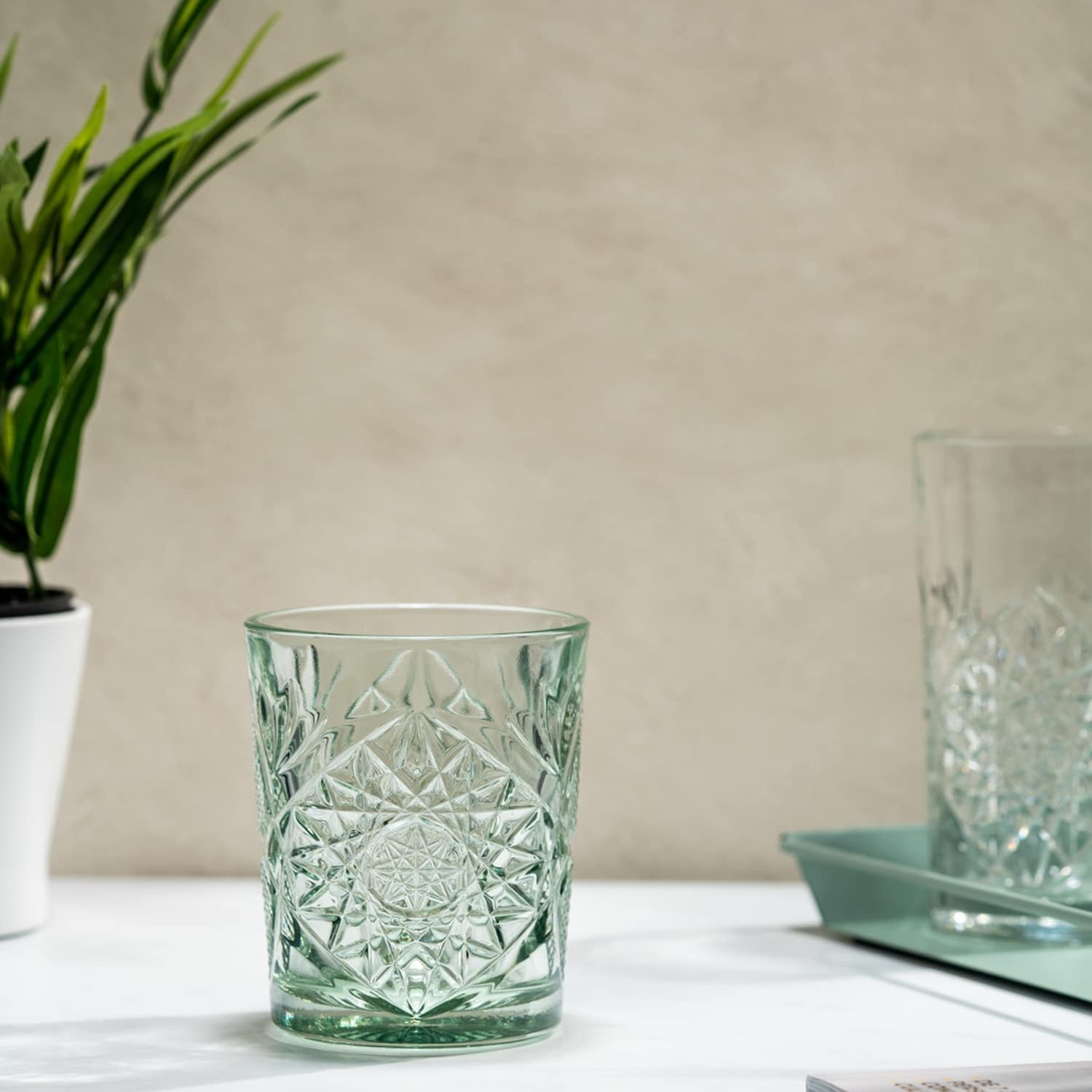
In Brazil, a batida is usually served in a simple, straight-sided glass at the café. At home, a 30 to 38 cl tumbler works best: it holds a full blender serving of about 15 cl, with room for the foam on top. The thick glass keeps the drink cold for longer, and the wide opening lets you smell the coconut and nutmeg with every sip. If you're making a large batch, simply place the blender jug on the table. View our tumbler glasses.

Eclat Longchamp Tumbler 32 cl (6 pieces)

RCR Aria Tumbler 38 cl (6 pieces)
Both sets together € 63,90.
The right tools
For a Batida de Coco, in addition to the glass, use a jigger for precise measuring, a nutmeg grater and glass straws. These are the bar tools we use ourselves; you'll find everything in our bar tools & cocktail sets.


Glass set (our choice 01) + 3 bar tools together € 82,80.
What do you make a Batida de Coco with?
For a Batida de Coco, you need cachaça. On every drink page, you'll find the alcohol percentage, what it tastes like, which cocktails it pairs with and which glass you need.


Variations & twists
Batida de Maracujá swaps coconut for passion fruit pulp, making it fresher and more tart; pineapple and mango are also common in Brazil. No condensed milk at home? Use 2 cl sugar syrup and 2 cl cream, although it will be less rich. Without a blender, you can also shake the batida vigorously with ice and strain it over fresh ice. If you're looking for coconut with rum and fruit, you'll end up with the Painkiller; with cachaça, lime and passion fruit, try the Passion Fruit Caipirinha.
Serving tip
Put the cachaça and the can of coconut milk in the refrigerator an hour in advance. That way you need less ice and the batida retains more of its full flavor. Serve with a thick straw and a bowl of salted cashews on the side.
Good to know
What is cachaça
Cachaça is Brazil's national spirit, distilled from fermented fresh sugarcane juice. Under Brazilian regulations, its alcohol content is between 38 and 48 percent. White or silver cachaça is unaged or briefly stored in neutral wood and tastes fresh, grassy and lightly fruity. Aged cachaça has been matured in wood, sometimes Brazilian hardwoods, and is rounder and spicier. For a batida, choose the white variety because it does not overpower the coconut. You can use the same bottle for a Caipirinha: cachaça with lime and sugar, muddled in the glass.
Making Batida de Coco without a blender
No blender? Then you will have a shaken batida, which is exactly what the name promises. Put the cachaça, coconut milk and condensed milk in a shaker with plenty of ice and shake as hard as you can for fifteen seconds. Condensed milk is syrupy, so first stir it into the cachaça before adding the ice. Then pour over fresh ice into the tumbler. You will get a slightly thinner drink with less foam, but the flavor remains the same. A large jar with a lid works too.
Coconut milk, coconut cream or cream of coconut
Those are three different products. Canned coconut milk is unsweetened and is the Brazilian choice this recipe is based on. Coconut cream is the thick, fatty part of coconut milk: deliciously rich, but use a little less of it, around 4 cl. Cream of coconut is a sweetened coconut cream best known from the Piña Colada. If you use that, halve the condensed milk, otherwise the batida will be too sweet. Coconut water does not work: it is thin and barely tastes of coconut, so the drink lacks body.
Batida de Coco for a group
For four people, put 20 cl cachaça, 24 cl coconut milk and 12 cl condensed milk in the blender, along with two generous handfuls of ice. A 1.5-liter blender jug can handle that all at once. Blend for twenty seconds and pour immediately, because after a few minutes the foam subsides and the coconut separates. You can combine the three liquid ingredients in a bottle in the refrigerator hours in advance. If you want to prepare something else for a larger group, see cocktails for a group.
Batida, Caipirinha, and Piña Colada
Batida and Caipirinha use the same cachaça, but are otherwise very different. The Caipirinha is fresh and sour: lime and sugar, muddled in the glass and topped with ice. Batida is a blended or shaken drink, often with milk or fruit, and creamy rather than sharp. Piña Colada comes from Puerto Rico and revolves around rum, pineapple, and sweetened coconut cream, making it fruitier and sweeter. Batida de Coco falls somewhere in between: creamy like a colada, with the strength and character of cachaça.
Alcohol-free batida de coco
Leave out the cachaça and replace it with 4 cl pineapple juice and 1 cl fresh lime juice. The pineapple juice adds volume and a little acidity, while the lime juice keeps the coconut and condensed milk fresh. Use slightly less condensed milk, about 2 cl, because without alcohol the sweetness comes through more strongly. Blend for the same amount of time as the original and serve in the same glass, so no one can tell the difference by the glass. For an alcohol-free version with more fruit, the Virgin Piña Colada is a good choice.
Frequently asked questions
What is Batida de Coco?
Batida de Coco is a Brazilian cocktail made with cachaça, coconut milk, and sweetened condensed milk, briefly blended with ice. It is creamy, cold, and frothy. Batida means beaten or shaken and is the Brazilian name for a whole family of drinks like these.
What is the difference between batida and caipirinha?
Both are made with cachaça, but the caipirinha is fresh and sour, with muddled lime and sugar in the glass. A batida is blended or shaken with fruit, sugar, or milk and is creamier and smoother. Batida de Coco is the best-known creamy version.
Can you replace cachaça with rum?
Yes, although it changes the taste. White rum makes the drink softer and more neutral. Rhum agricole comes closest to cachaça, as it is also distilled from fresh sugarcane juice. Do not use dark or spiced rum: it overpowers the coconut.
How much alcohol is in a Batida de Coco?
About 11 percent in the glass. The 5 cl of 40 percent cachaça provides 2 cl of pure alcohol, spread across about 18 cl of drink, including melted ice. That is about 16 grams of alcohol, or more than one and a half standard drinks. Using coconut cream instead of coconut milk makes little difference.
Everything for your bar,
to one address
Hospitality-quality glasses, supplied in sets. Order today, delivered quickly.
Shop the glasses →