

Heineken
Heineken is the best-known pilsner in the Netherlands and one of the largest beer brands in the world. The story began in 1864 in Amsterdam. Here you can read what Heineken tastes like, which bottles and cans are available, how to pour a pilsner properly and which glass goes with it.

An Amsterdam brewery that went global
In 1864, Gerard Adriaan Heineken bought De Hooiberg brewery in Amsterdam. He soon switched to bottom-fermented beer, the light, clear style that was emerging from Germany and Bohemia at the time. That became the pilsner we know today. The old brewery on Stadhouderskade is no longer a brewery, but a visitor center: the Heineken Experience. Most Heineken beer sold in the Netherlands now comes from the breweries in Zoeterwoude and Den Bosch.
Heineken brews with water, barley malt, hops and its own yeast culture, A yeast. This yeast has been used since the nineteenth century and gives the beer its lightly fruity note. Bottom fermentation means the yeast works at a low temperature and the beer then matures cold for a long time. This makes the beer clear, fresh and clean-tasting. Alongside the regular pilsner, there is Heineken 0.0: the same base, but without alcohol. You can recognize the brand by its green bottle with the red star.
In brief
Heineken in bottles and cans, with and without alcohol
At Gall & Gall, you can buy two Heineken beers: the regular 5% Premium Pilsener and Heineken 0.0. Both are available in bottles and cans, in different pack sizes.
Heineken Premium Pilsener, bottle
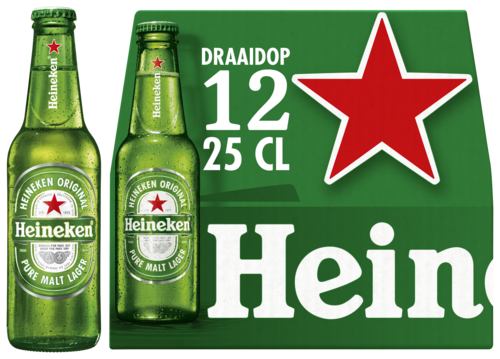
The classic Heineken in the 25 cl green bottle with a twist-off cap. Available in packs of 12 or 24. Fresh, lightly fruity and with a short bitter hop finish.

Heineken Premium Pilsener, can
The same full-malt pilsner in cans: 33 cl cans in a tray of 4 x 6, or large 50 cl cans in packs of six. Handy for a party or a day on the water.

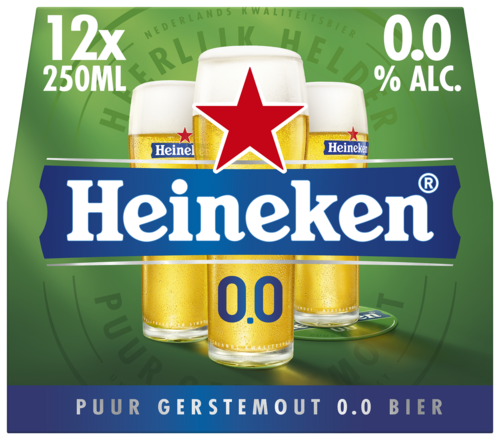
Heineken 0.0, bottle
Alcohol-free beer made with the same A-yeast. Fruity, with light notes of malt and a softly bitter finish. In 25 cl bottles, in packs of 6 or 12.

Heineken 0.0, can
Heineken 0.0 in 33 cl cans, six-pack. Refreshing and lightly malty, without alcohol.
Why is pils so clear and fresh, and what is the difference between it and a specialty beer? Read all about it on our pils page.
How is alcohol-free beer made, and what is the difference between 0.0 and low-alcohol? Read about it on our alcohol-free beer page.
Fresh, lightly fruity and briefly bitter
Malt and a hint of fruit
Lightly grainy, with a soft fruity note from the A-yeast. You may sometimes detect a hint of green apple. The hops are present but restrained.
Slim and lively
A light body with plenty of carbonation. A hint of sweetness from the malt, balanced by the bitterness of the hops. This makes it easy to drink.
Short and dry
The finish is short, dry and slightly bitter. Heineken 0.0 is slightly sweeter and maltier, with a softer bitter note.
Tasting profile of Heineken Premium Pilsener. The 0.0 scores slightly higher on sweetness and somewhat lower on bitterness.
How to pour a Heineken
Drink pils cold, with a firm head and from a clean glass. With those three things, you will immediately taste the difference.
Cold, around 3 to 5 degrees
Pils is at its best when it is properly chilled. Put the bottles or cans in the refrigerator a few hours in advance. Ice-cold from the freezer is too cold: then you can barely taste anything and the beer becomes flat.
More about pils →Two-finger head
Rinse the glass with cold water. Hold it at an angle, pour along the side and straighten the glass when it is three-quarters full. This gives you a head of about two fingers. The foam keeps the carbonation in the beer and the aroma above the glass.
More about pouring beer →Grease-free glass
Grease and traces of dish soap break down the foam. Wash beer glasses separately, rinse them well with hot water, and let them drain instead of drying them with a tea towel. You can tell it's clean when the glass is streak-free and has no bubbles clinging to the sides.
Taste beer like a connoisseur →Heineken at the table and with drinks and snacks
A refreshing pilsner doesn't overpower the food. It cuts through fat and salt and soothes spicy dishes. That's why it goes with much more than just Dutch meatballs.
Dutch meatballs and cheese
Fried snacks, nuts, young cheese, and sausage. The carbonation and slight bitterness cleanse your palate after every bite.
Grilled meat
Hamburgers, satay, sausages, and grilled chicken. A cold pilsner is the classic thirst-quencher alongside the barbecue.
Asian and Mexican
Curry, nasi goreng, tacos, and chili. A light beer with plenty of carbonation dampens the heat better than a heavy specialty beer.
Lunch and sports
You drink Heineken 0.0 with a sandwich, after exercising, or when you still have to drive. It is also delicious in a michelada with lime and a bit of kick.
The right glass for Heineken
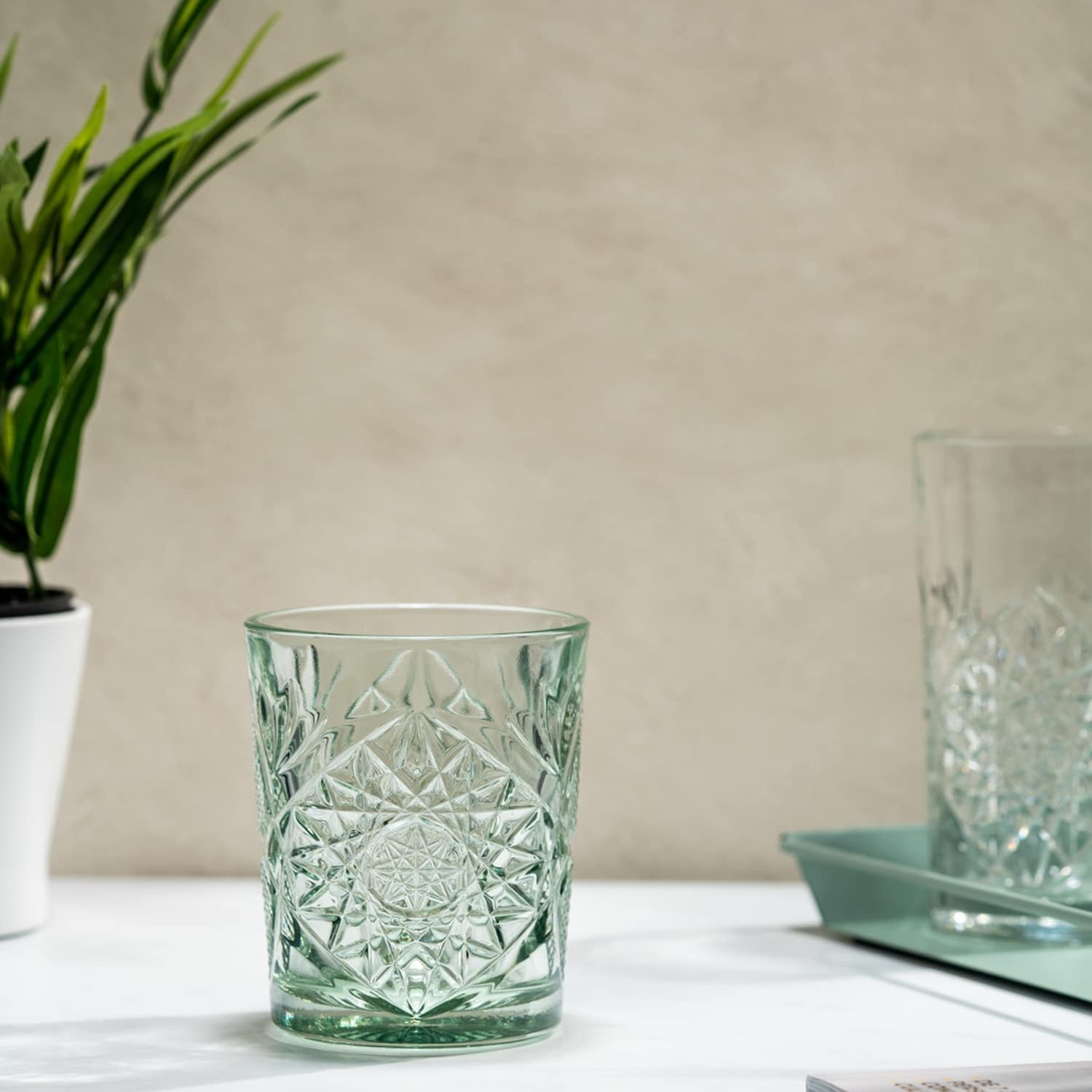
At the pub, you get a Heineken in a vase glass or a flute: a straight, narrow glass that retains the carbonation. At the table, a pilsner also works well in a stemmed beer glass. It looks festive, and the stem keeps your hand away from the cold beer.


Everything you still wanted to know about Heineken
Can't find your question? Read more about tasting beer, or get in touch.
To the beer tasting →What kind of beer is Heineken?
How much alcohol does Heineken contain?
What is Heineken's A-yeast?
Where is Heineken brewed?
How cold should you drink Heineken?
Which glass do you use for Heineken?
Buy Heineken
Want the bottle at home right away? Order Heineken online from Gall & Gall. Gall & Gall has 7 in stock.
Heineken Premium Pilsener Beer Can 0.0 6X
Heineken Premium Pilsener Beer Twist-Off Bottle 0.0 6X

Prices as of October 8, 2026, as provided by Gall & Gall. You can see the current price and stock at Gall & Gall. Glazen.nl receives a small commission if you buy something through these links; you pay nothing extra. No 18, no alcohol.