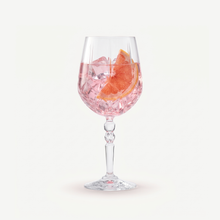
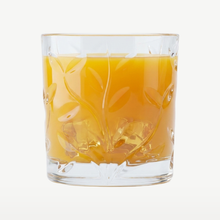
Royal Leerdam Carre Wine Glass 28 Cl - 6 Pieces
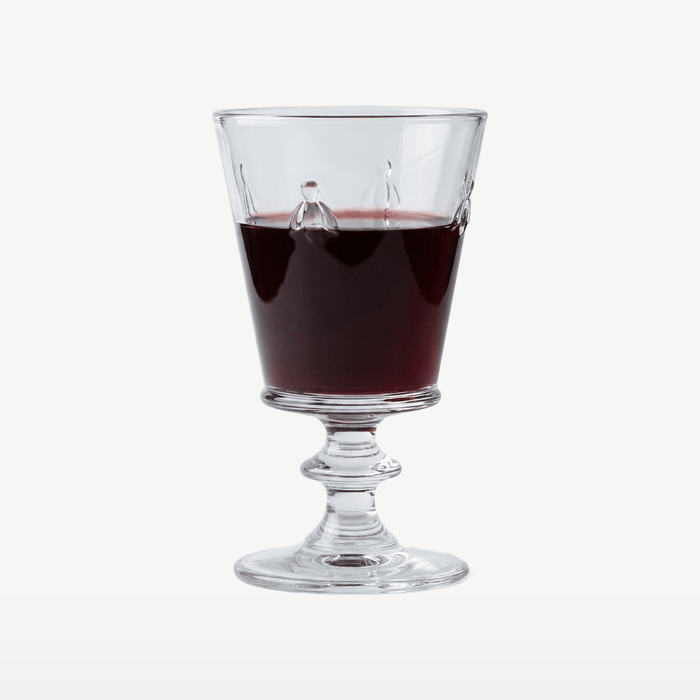
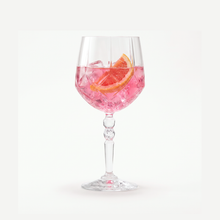
La Rochère Abeille Wine Glass 24 cl - 6 Pieces
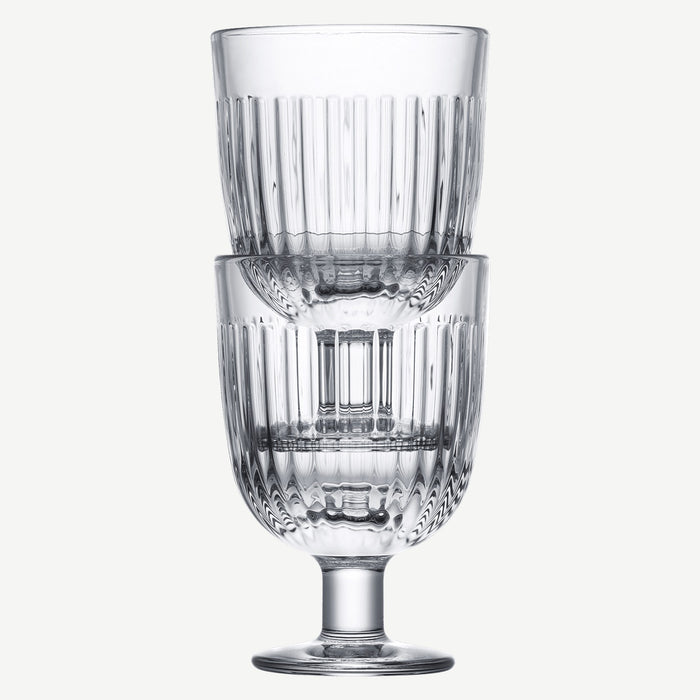
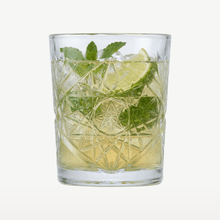
La Rochère Ouessant Stackable Wine Glass 22 Cl - 6 Pieces
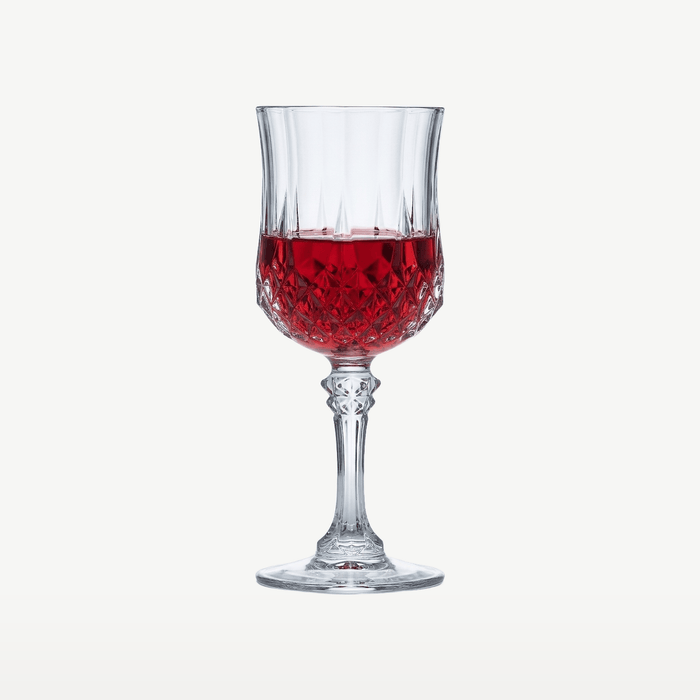
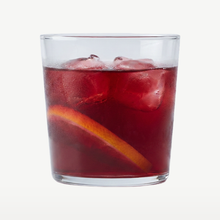
Eclat Longchamp Wine Glass 25 Cl - 6 Pieces

How to pour it
a Bordeaux in
Chill a red Bordeaux in the fridge for half an hour. A room at twenty degrees is too warm: at 16 to 18 degrees, the fruit holds up and the alcohol doesn’t come to the fore. Chill a white Bordeaux for longer, down to 8 to 10 degrees; otherwise, the freshness that sémillon and sauvignon blanc should bring will disappear.
Cut around the capsule just below the neck ridge and wipe the rim clean. Then read the label: the appellation tells you which part of the region the wine comes from, the château name tells you who made it, and the word cru refers to a ranking of estates within a subregion. Insert the corkscrew into the center of the cork and pull it out slowly and straight.
Decant Bordeaux for two different reasons. Pour a young bottle into a decanter to aerate it: the tannins soften and the fruit comes through, and half an hour in the decanter is often enough. Decant an old bottle to leave the sediment behind; stand it upright a day beforehand and stop pouring as soon as the sediment reaches the neck.
Fill the bowl to about a third. In a Bordeaux glass, that may look like very little compared with the bowl’s size, but it lets you swirl the wine while keeping its aroma in the glass. A glass filled to the brim also warms up faster than one that’s a third full.
What did you think of this guide?
One click on a star is all it takes. If you’d like to add a comment, we’ll review it before it appears here.
Save this page
Send this page to your own inbox so you have the information handy when it’s time to pour. You’ll also receive a €5 discount code on orders over €50 for the matching glasses.
The story
Bordeaux is first and foremost a region, not a grape. That’s what sets it apart from many other wine names on a label: when you pour a Bordeaux, you’re almost always drinking a blend of several grapes rather than a single variety. Which grape takes the lead depends on which bank the vineyard is on. The Gironde and the rivers that flow into it divide the region in two, and the soil differs on each side: gravel and stones on one bank, more clay and limestone on the other. Cabernet Sauvignon does well in warm, stony soils, while Merlot prefers cooler clay. The blend is therefore not a winemaker’s trick but a result of the soil.
The right glass
A Bordeaux calls for a tall bowl with a generous body and a rim that tapers slightly inward. The height gives the wine room to breathe without letting the aroma dissipate too quickly, which is exactly what a robust, tannic wine needs. Option 01 is a Bordeaux glass like this; its description explicitly mentions Bordeaux, Syrah, and Cabernet, and recommends never filling it more than a third. Option 02 is the white wine glass from the same series, with a smaller bowl that keeps white Bordeaux cool. Find more sizes and shapes in the white wine glasses.

Schott Zwiesel Vina Bordeaux Glass 63 cl (6 pieces)

Schott Zwiesel Vina White Wine Glass 28 cl (6 pieces)
Both sets together € 102,00.
The right tools
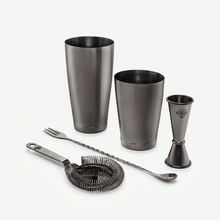
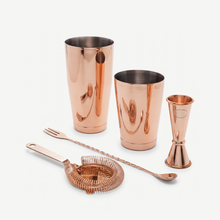
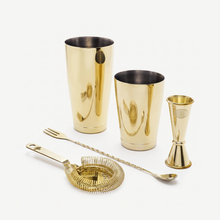
Alongside the glass, a corkscrew is the main tool you need for a bottle of Bordeaux, and, for a young or very old bottle, a decanter. If you don't finish the bottle in one go, a wine stopper will help. The bar tools below only come into play when you're making a pitcher of sangria or mulled wine: a bar spoon for stirring and a jigger for measuring. These are the bar tools we use ourselves; you'll find everything in our bar tools & cocktail sets.

Stirs a pitcher of sangria or mulled wine without making it frothy

Glass set (our pick 01) + 2 bar tools together € 76,90.
What do you serve alongside it?
Bordeaux is one region among a much wider selection. These are the varieties and regions that might be served before, alongside, or after it, from a glass of Champagne beforehand to a Burgundy from a completely different part of France. On each liquor page, you'll find the alcohol percentage, what it tastes like, which cocktails go with it, and which glass you need.


Variations & twists
Bordeaux isn’t just red. The region makes dry white wine from Sémillon and Sauvignon Blanc, rosé, and sweet Sauternes from grapes that have dried on the vine. Red wines also vary widely in style: a light bottle from a broad appellation tastes different from one from a small village that has spent a long time aging in the bottle. If there’s a little left over, it works well in sangria or mulled wine. Want to read more? Browse all drinks and brands.
Serving tip
Serve red at 16 to 18 degrees and white at 8 to 10, and don’t leave the bottle next to the stove between pours. Classic regional foods work well alongside: lamb, duck, a piece of grilled ribeye, or a board of hard cheeses. White wine goes well with fish, seafood, and anything finished with lemon. If you have half a bottle left, seal it and keep it cool.
Good to know
Why Bordeaux is almost always a blend
In Bordeaux, the region appears on the label, not the grape, and the wine is almost always a blend of several varieties. The two main grapes in red wines are Cabernet Sauvignon and Merlot, with smaller proportions of Cabernet Franc, Petit Verdot, and Malbec. The proportions vary by producer and vintage, because some grapes ripen earlier than others, and the weather differs from year to year. That blending is what makes it possible to achieve the same style every year.
The Left Bank and Right Bank, and what the soil has to do with it
The Left Bank, including the Médoc and Graves, has gravelly, stony soils. These warm up quickly and retain heat, allowing Cabernet Sauvignon to ripen well; the wines are firm, with pronounced tannins and a somewhat more linear structure. The Right Bank, including Saint-Émilion and Pomerol, has more clay and limestone. This soil stays cooler and retains water, which suits Merlot better; the wines are rounder and softer. Hence the rule of thumb: Cabernet-based on the Left Bank, Merlot-based on the Right Bank.
The white Bordeaux many people forget
Most people associate Bordeaux with red wine, but the region also makes dry white wine, mainly from Sémillon and Sauvignon Blanc. Sauvignon Blanc brings acidity and fresh, herbal aromas, while Sémillon adds body and a rounder mouthfeel. Together, they make a white wine with more substance than a typical Sauvignon Blanc. Serve it at 8 to 10 degrees, in a smaller glass than you would use for red.
Sauternes, the sweeter side of the same region
Sauternes is a subregion within Bordeaux where sweet white wine is made. The grapes, again mainly Sémillon and Sauvignon Blanc, are left on the vine for a long time and partially dry out, concentrating the sugar and flavor. The result is a rich, sweet wine with an underlying acidity, served chilled at 6 to 8 degrees and in small amounts. It belongs to the region, even though it is nothing like the red wines made nearby.
How to read a Bordeaux wine label
Three things are almost always listed. The appellation tells you which part of the region the wine comes from: the smaller the area, the stricter the rules and the more specific the style. The name of the estate tells you who made the wine, and in Bordeaux an estate is often called a château, even if there is no castle. The word cru refers to a ranking of estates within a subregion; the rankings and how they are structured vary by subregion, and indicate the estate’s reputation, not the bottle you have in front of you.
Temperature, glass, and alcohol content
Serve red at 16 to 18 degrees in a large-bowled glass of 60 cl or more; dry white at 8 to 10 degrees in a smaller glass; Sauternes at 6 to 8 degrees in a small stemmed glass. Pour each to about a third full. Red Bordeaux is usually roughly between 12 and 15 percent alcohol, while white is a little lower. The percentage is on the label.
Frequently asked questions
Which grapes are in Bordeaux wine?
In reds, Cabernet Sauvignon and Merlot usually take the lead, complemented by smaller amounts of Cabernet Franc, Petit Verdot, and Malbec. Dry whites are made mainly from Sémillon and Sauvignon Blanc. Bordeaux is therefore almost always a blend, and the label names the region rather than the grape.
What is the difference between the Left Bank and the Right Bank?
The Left Bank, including the Médoc and Graves, has gravelly soils and Cabernet Sauvignon as its main grape; those wines are more robust and have more tannin. The Right Bank, including Saint-Émilion and Pomerol, has more clay and limestone, with Merlot as its main grape; those wines are rounder and softer. So the difference starts with the soil.
At what temperature should you serve Bordeaux, and in what kind of glass?
Serve red at 16 to 18 degrees, so give it half an hour in the fridge if the bottle is at room temperature, in a large-bowled glass of 60 cl or more. Serve dry white Bordeaux at 8 to 10 degrees in a smaller glass. Pour to about a third full, leaving room to swirl the wine.
Do you need to decant Bordeaux?
That depends on the bottle and the reason for decanting. You decant a young bottle to aerate it, softening the tannins and bringing out the fruit; half an hour is often enough. You decant an old bottle to leave the sediment behind, and then just before serving. A simple, light Bordeaux needs neither.
Also delicious
Buy Bordeaux
Want the bottle delivered straight to your door? Order Bordeaux online from Gall & Gall. Gall & Gall has 120 options, one of which is on sale.
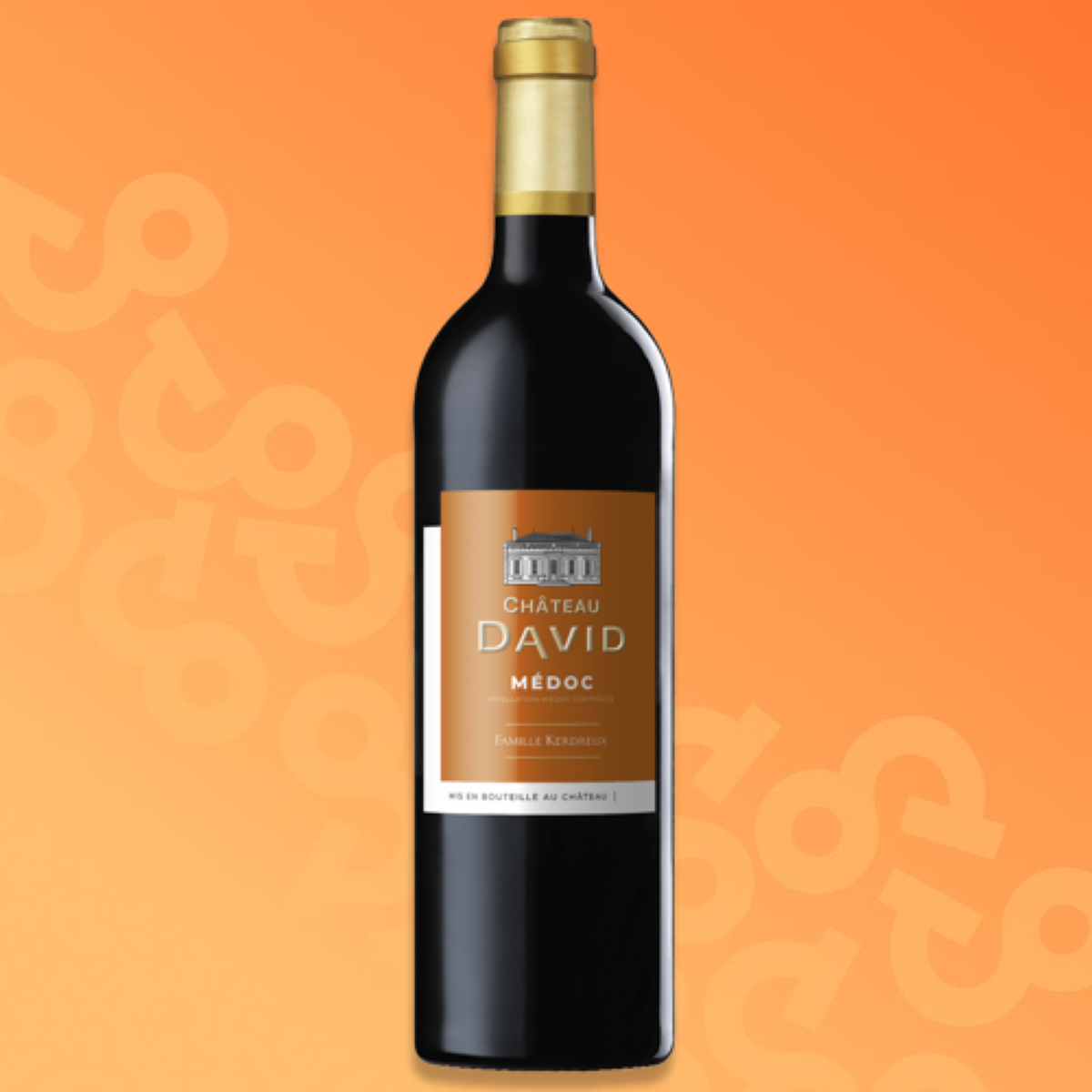
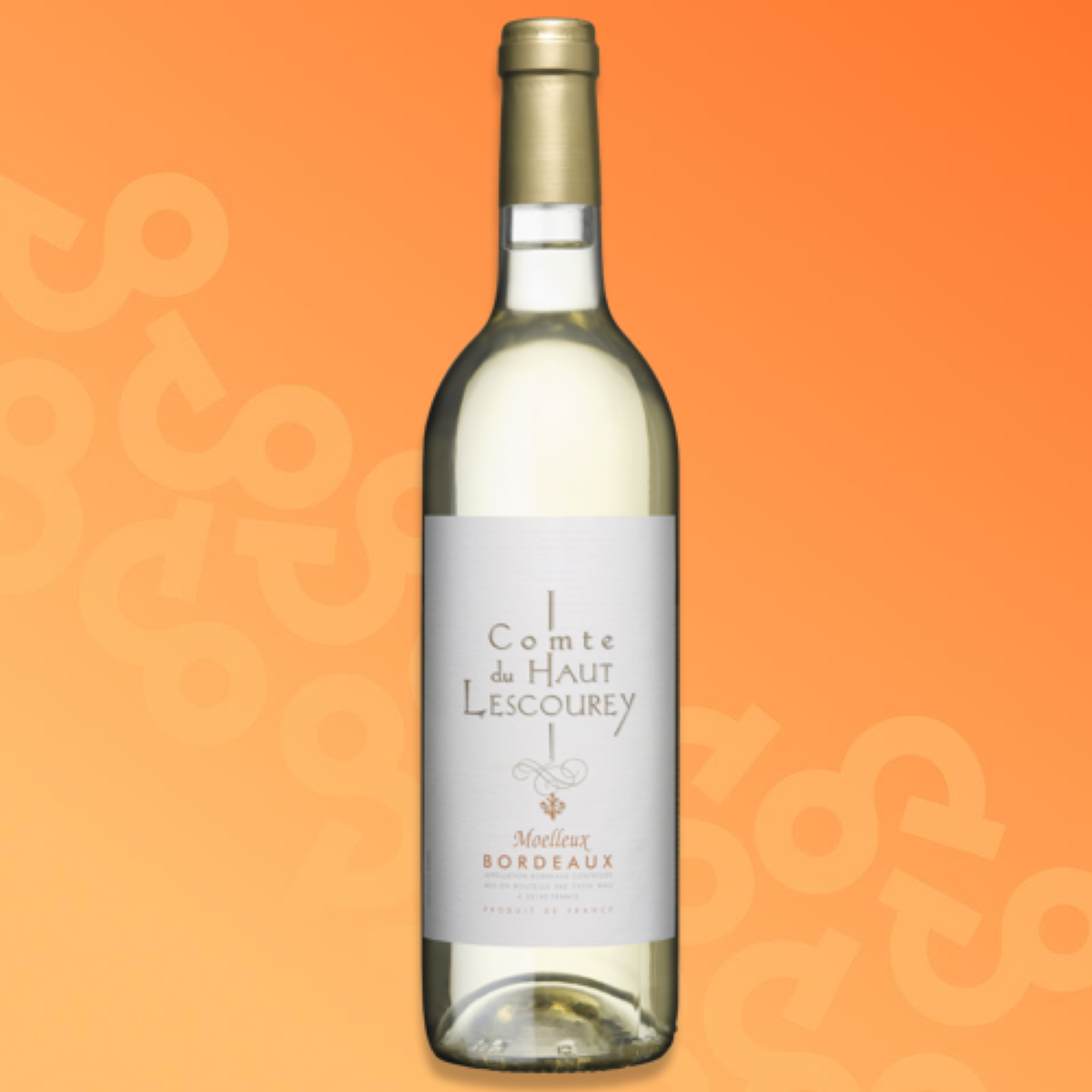
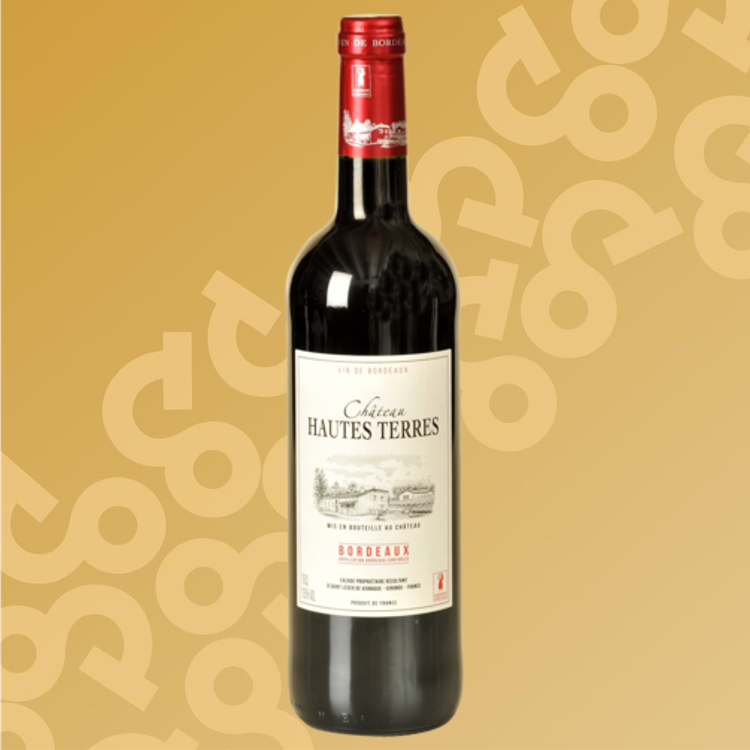
Château Hautes Terres Bordeaux Rouge
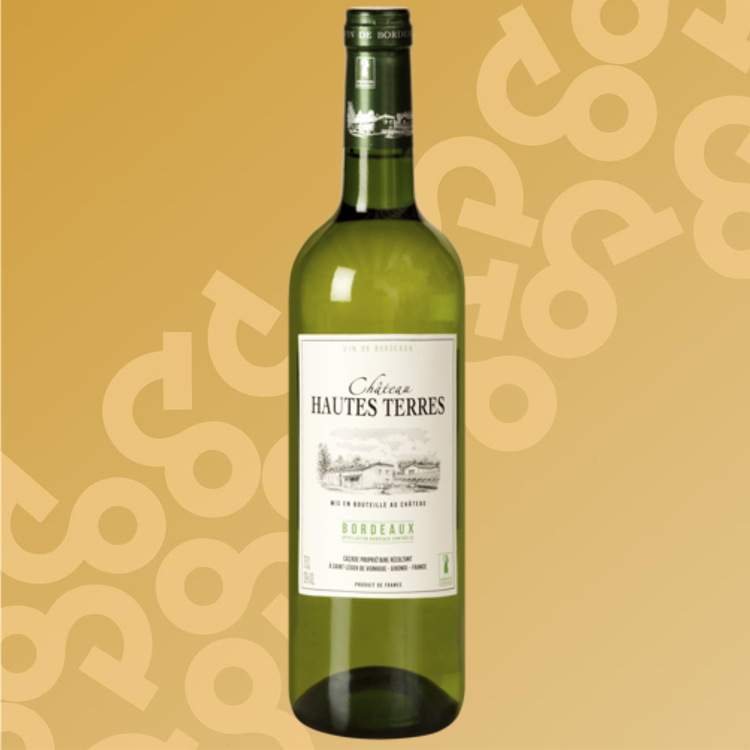
Château Hautes Terres Bordeaux Blanc
Prices as of November 20, 2026, as provided by Gall & Gall. You can see the current price and stock at Gall & Gall. Glazen.nl receives a small commission if you buy something through these links; it costs you nothing extra. No one under 18, no alcohol.
Everything for your bar,
at one address
Hospitality-quality glasses, sold in sets. Order today and get them delivered quickly.
Shop glasses →