







The tartare recipe
for your table
Place the piece of meat in the freezer for half an hour, tightly wrapped in plastic wrap. Firm meat cuts into neat cubes; at room temperature, it smears under the knife and you end up with strands instead of little cubes.
Using a sharp knife, first cut the meat into thin slices, then cut those slices into strips and the strips into cubes a few millimetres wide. Do not use store-bought ground beef: it is ground too finely and also comes from a different cut of meat.
Finely chop the shallot, capers and gherkin and chop the parsley. Set everything aside and keep the meat covered in the refrigerator until the last moment.
Only mix the meat with the shallot, capers, gherkin, parsley, mustard, Worcestershire sauce and Tabasco when plating, season with salt and pepper, and press everything into a ring or a small glass. Place the egg yolk on top last.
What did you think of this recipe?
One click on a star is enough. If you’d like to add something, we’ll review it first before it appears here.
Save this recipe
Send the tartare recipe to your own email, so you’ll have it at hand when you’re about to make it. You’ll also receive a €5 discount code on orders from €50, for the glasses that go with it.
The story
Tartare is raw beef, cut into cubes by hand and seasoned with acidic and salty ingredients: shallot, capers, gherkin and mustard. The difference from carpaccio lies in the knife. Carpaccio is cut into wafer-thin slices and remains whole; tartare is cut into cubes and mixed. An Americain salad is something else again: it is a spreadable mixture that is sold ready-made at the butcher's counter, finer in texture and with more moisture. With tartare, you can still recognize the meat as meat and feel each cube separately, and that is exactly the point.
The right glass
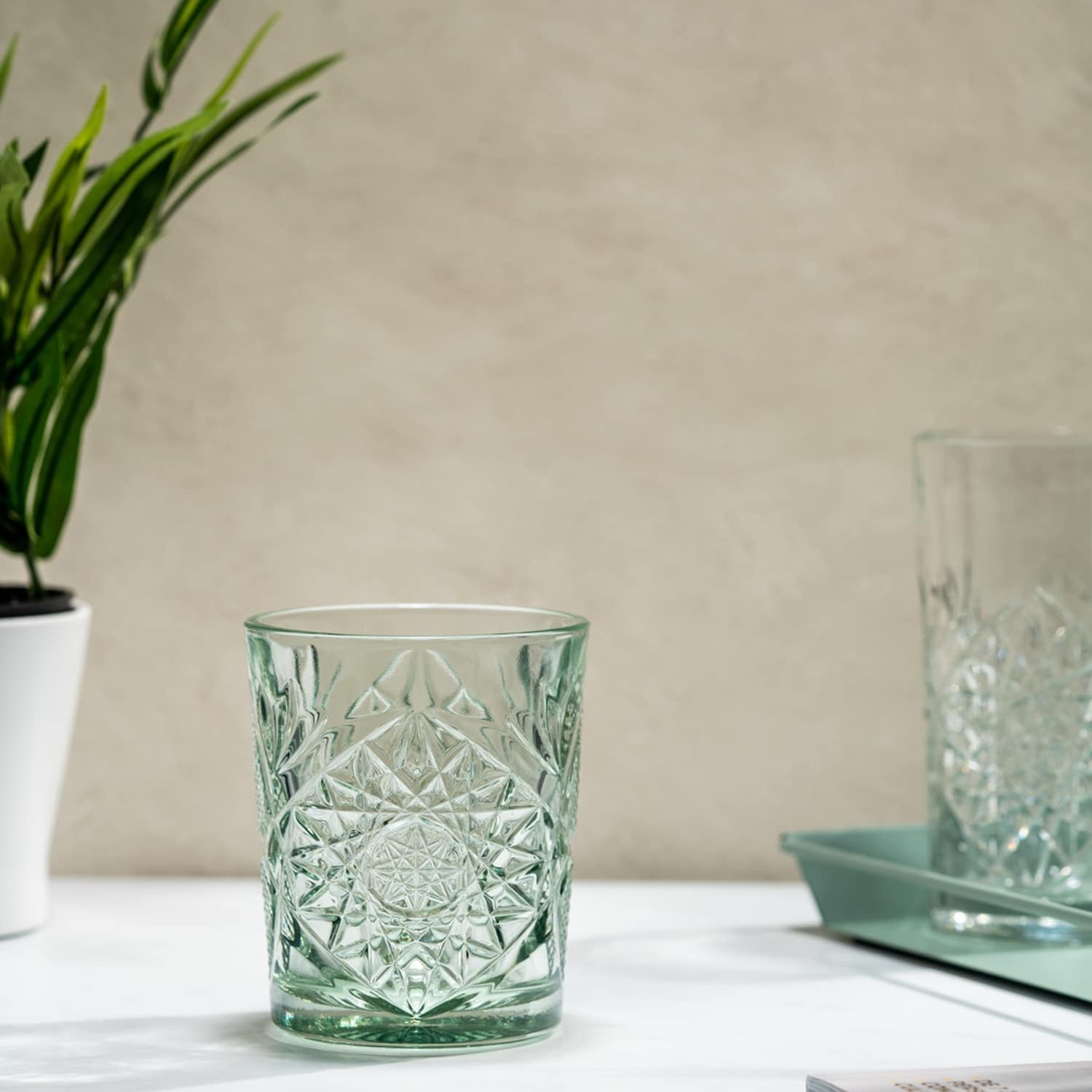
Tartare is usually pressed into a ring on the plate so that it keeps a neat shape. A cooking ring is not glassware, so a little glass with straight sides comes closest: you press the tartare into it, right into the corners, and through the sides you can see how coarsely the meat has been cut. A square bowl of around 10 centilitres is the clearest shape for this. If you want to be able to use a spoon and serve the bite a little more generously, a low, wide glass with a heavy base is more practical; these can also be found among the tumbler glasses.

La Rochère Kube Amuse Bowl 10 cl (6 pieces)

RCR Circus Low Tumbler 17 cl (6 pieces)
Both sets together € 52,90.
The right tools
For tartare, besides the glass, you use a bar spoon to press the tartare into the corners of the glass and a cocktail pick for a gherkin or caper on the side. These are the bar tools we use ourselves; you can find everything in our bar tools & cocktail sets.


Glassware set (our choice 01) + 2 bar tools together € 65,85.
What should you serve alongside it?
Raw meat with mustard, capers and Tabasco already brings plenty of heat, so a wine with a lot of oak tends to make the whole thing heavier rather than better. A red wine with some acidity works well, and anyone going the Dutch route should serve a small glass of jenever alongside it. Well-known choices include Brunello and Bourgogne. On each drinks page, you can read the alcohol percentage, what it tastes like, which cocktails it works in and which glass you need.


Variations & twists
You can use the same approach with tuna or salmon, but then add lemon, soy sauce and chives instead of mustard and Worcestershire sauce. Beetroot, cooked first and then cut into cubes, is the vegetarian version and needs a little more acidity. A quail egg yolk instead of a regular yolk works better for a bite-sized serving, as it stays nicely rounded. Grated truffle or a spoonful of truffle mayonnaise makes the whole dish rounder. Looking for more inspiration? Browse more than 100 cocktail recipes.
Serving tip
Prepare the tartare on chilled plates or in glasses that you have briefly placed in the fridge, so the meat stays at the right temperature until it reaches the table. Season only at the last moment and place the egg yolk on top just before serving. Serve it with toasted bread or a thin piece of toast, because the tartare itself is soft and needs something crunchy.
Good to know
Why do you cut the meat yourself instead of using ground beef?
Store-bought ground beef has been put through a mincer, which destroys the texture and makes the meat feel mushy. In addition, ground beef often comes from different parts of the cow than the lean, sinew-free cut you want for steak tartare. Hand-cut cubes a few millimetres in size retain their shape, release less moisture, and you can still taste that you are eating meat rather than a mixture.
What is the difference between this and carpaccio and americain salad?
Carpaccio is sliced into paper-thin slices and remains intact on the plate; steak tartare is cut into cubes and mixed with shallot, capers, gherkin and mustard. Americain salad is a spreadable mixture that is ready-made at the butcher’s: finer, wetter and intended for bread. All three are made from raw beef, but the texture is what sets them apart.
Why do you mix everything only at the last moment?
Salt, mustard and the acidity from the pickle and capers draw moisture out of the meat. If you mix it an hour in advance, a wetter, greyer mass will be in the glass when served and the bite will be gone. So cut everything in advance, keep it separate and cold, and mix it only when the plates are ready.
Which meat do you buy for it?
Beef tenderloin is the usual choice: lean, fine-textured and free of sinew. Steak or round steak can also be used, provided you cut away the silver skin. Ask the butcher for it and mention that you will be eating it raw; they will know which cut to choose and how to package it.
Raw meat and a raw egg yolk: what should you look out for?
Buy the meat fresh from the butcher and say that it will be eaten raw. Keep it cold from start to finish, use a clean board and a clean knife, and eat it on the day you buy it. The same applies to the egg: use a fresh egg and only crack it when plating. Do not leave the tartare on the counter or keep leftovers for the next day.
Frequently asked questions
Why don't you use minced meat for tartare?
Minced meat has gone through a grinder and is therefore too fine: the structure disappears and the mixture becomes mushy. It also usually comes from different parts of the beef. For tartare, cut beef tenderloin or steak by hand into cubes a few millimetres across.
What is the difference between tartare and carpaccio?
The cut. Carpaccio is cut into wafer-thin slices and remains whole; tartare is cut into cubes and mixed with shallot, capers, pickle and mustard. An Americain salad is finer and spreadable, and is available ready-made from the butcher.
How do you cut tartare by hand?
Place the meat in the freezer for half an hour, tightly wrapped in plastic wrap, so it firms up without freezing through. Then cut it with a sharp knife into thin slices, the slices into strips and the strips into cubes a few millimetres across.
Which glass do you use for tartare as a snack?
A straight-sided glass of around 10 centilitres: press the tartare into it as you would use a ring on a plate, and the sides let you see how coarsely the meat has been cut. A lower, wider glass with a heavy base works if you want to use a spoon in it.
Also delicious
Everything for your bar,
at one address
Glasses in catering quality, supplied per set. Order today, delivered quickly.
Shop the glasses →