





Rhône
The Rhône is the wine region along the river of the same name, from just below Lyon to beyond Avignon. In the north, they make robust syrah, while in the south, they make warm blends of grenache, syrah and mourvèdre. Côtes du Rhône and Châteauneuf-du-Pape come from there.


Wine from the Rhône, by type
The Rhône revolves around a few grapes and one major appellation. We have a dedicated page for four of them.

Côtes du Rhône
The region’s best-known wine, with the difference between Côtes du Rhône and Côtes du Rhône Villages explained.
About Côtes du Rhône →
Grenache
The grape that sets the tone in the south: soft, juicy and often fairly high in alcohol.
About Grenache →
Shiraz
In France, it is called syrah. In the northern Rhône, it is the only red grape used for red wine.
About Shiraz →
Viognier
The aromatic white grape from the northern Rhône, full-bodied and rounded with low acidity.
About Viognier →One river, two very different halves
The Rhône rises in Switzerland and flows via Lyon to the Mediterranean Sea. The wine region begins just south of Lyon and extends beyond Avignon. It is divided into two parts that are best considered separately. The northern Rhône is narrow and small. The vineyards there lie on steep slopes and terraces along the river. Only syrah is used for red wine there. Well-known names include Côte-Rôtie, Hermitage, Crozes-Hermitage, Saint-Joseph and Cornas. For white wine, you’ll find marsanne and roussanne, and viognier in Condrieu.
Much farther south, the landscape becomes broader and flatter, and the climate warmer and drier. The mistral, a cold, dry wind from the north, often blows here. In the southern Rhône, it is all about blends. Grenache is usually the main grape, complemented by Syrah and Mourvèdre. This combination is also known as GSM. Cinsault and Carignan sometimes join in. Most Côtes du Rhône comes from this southern part. Above these are villages and crus with their own names, such as Gigondas, Vacqueyras, Rasteau and Châteauneuf-du-Pape. The latter owes its name to the popes who lived in Avignon in the fourteenth century. Some of the vineyards lie on large, rounded stones that absorb heat during the day. Tavel is a special case: they make only rosé there.
In brief
Seven bottles, from Côtes du Rhône to Saint-Joseph
The higher the wine sits on the ladder, the smaller and more specific the area named on the label. First the southern blends, then a Syrah from the north, and finally two whites.

M. Chapoutier Côtes du Rhône
An entry-level wine from one of the region's best-known houses. Grenache and Syrah, juicy and easy to drink.

Louis Bernard Côtes du Rhône-Villages
A step up from standard Côtes du Rhône. Mainly Grenache, complemented by Syrah and Mourvèdre.

Vidal-Fleury Gigondas
Three-quarters Grenache, with Syrah and Mourvèdre. Fruity and powerful, with blackberries, cherries, plums, thyme, rosemary and pepper.

Vidal-Fleury Châteauneuf-du-Pape
The most famous wine from the south, here made with 85 percent Grenache, plus Syrah and Mourvèdre. Cherries, plums, pepper and nutmeg.

Vidal-Fleury Saint-Joseph
One hundred percent Syrah from the north. Cassis, black pepper, nutmeg and a hint of forest floor.

Laurus Côtes du Rhône Blanc
White Côtes du Rhône made from six local grapes, led by viognier, grenache blanc, roussanne and marsanne. Full and round.

Vidal-Fleury Crozes-Hermitage Blanc
Marsanne and roussanne, the classic white duo from the north. Rich wine with ripe pear, apricot, almond and honey.
What is the difference between Côtes du Rhône, Villages and a Villages with a village name? You can read about it on our Côtes du Rhône page.
Ripe fruit, pepper and wild herbs
Red fruit & garrigue
A southern Rhône smells of ripe cherries, strawberries and blackberries. Underneath is often garrigue: the scent of wild thyme, rosemary and bay leaf. Syrah from the north smells darker, of cassis, violets and black pepper.
Warm and full
Grenache produces a soft, round wine with lots of fruit and often a generous hit of alcohol. Syrah and mourvèdre bring color, tannin and spiciness. A northern syrah is tighter and fresher than a blend from the south.
Spicy
The finish is dry and spicy, with pepper and some spices. White Rhône wine finishes round and full, with stone fruit, almond or honey.
Flavor profile of an average red Côtes du Rhône. A Châteauneuf-du-Pape scores higher in power, while a northern syrah is slightly fresher.
How to serve Rhône wine
Red just below room temperature, white chilled but not ice-cold, and a powerful cru gets some air first.
Red at 16 to 18 degrees
Rhône wine is often high in alcohol. If served too warm, you mainly taste the heat and less fruit. Serve a Côtes du Rhône at around 16 degrees, and a Châteauneuf-du-Pape or Gigondas closer to 18 degrees. If the bottle is in a warm room, put it in the fridge for about fifteen minutes.
More about wine temperature →Let a cru breathe for a while
You can pour a young Côtes du Rhône straight away. A young Châteauneuf-du-Pape, Gigondas or northern Rhône syrah is often somewhat closed. Pour it into a decanter half an hour to an hour before the meal. This allows the fruit and spices to come through better.
Decanters →Chill white and rosé
White Rhône wine is full-bodied and round. Serve it at 10 to 12 degrees, not ice-cold, otherwise you will taste very little. A rosé, for example from Tavel, can be served colder: 8 to 10 degrees. Take white wine out of the refrigerator a few minutes before serving.
More about decanting →Rhône wine at the table
Rhône wine comes from a region with a sunny, herb-infused cuisine. Think lamb, stews, olives, and thyme. The wine pairs best with these dishes.
Stew and barbecue
A juicy Côtes du Rhône pairs well with stews, barbecue sausages, grilled vegetables, and a generously filled sharing platter with pâté and salami.
Lamb and game
The powerful crus from the south call for substantial dishes: leg of lamb with garlic and rosemary, venison stew, or a hearty steak.
Duck and pepper
A Crozes-Hermitage or Saint-Joseph pairs well with duck, steak with pepper sauce, or dishes with mushrooms.
Poultry and creamy sauces
Full-bodied white Rhône wine pairs well with chicken, turkey, fish in cream sauce, and soft cheeses. A dry rosé is delicious with Mediterranean appetizers and barbecue.
The right glass for Rhône wine
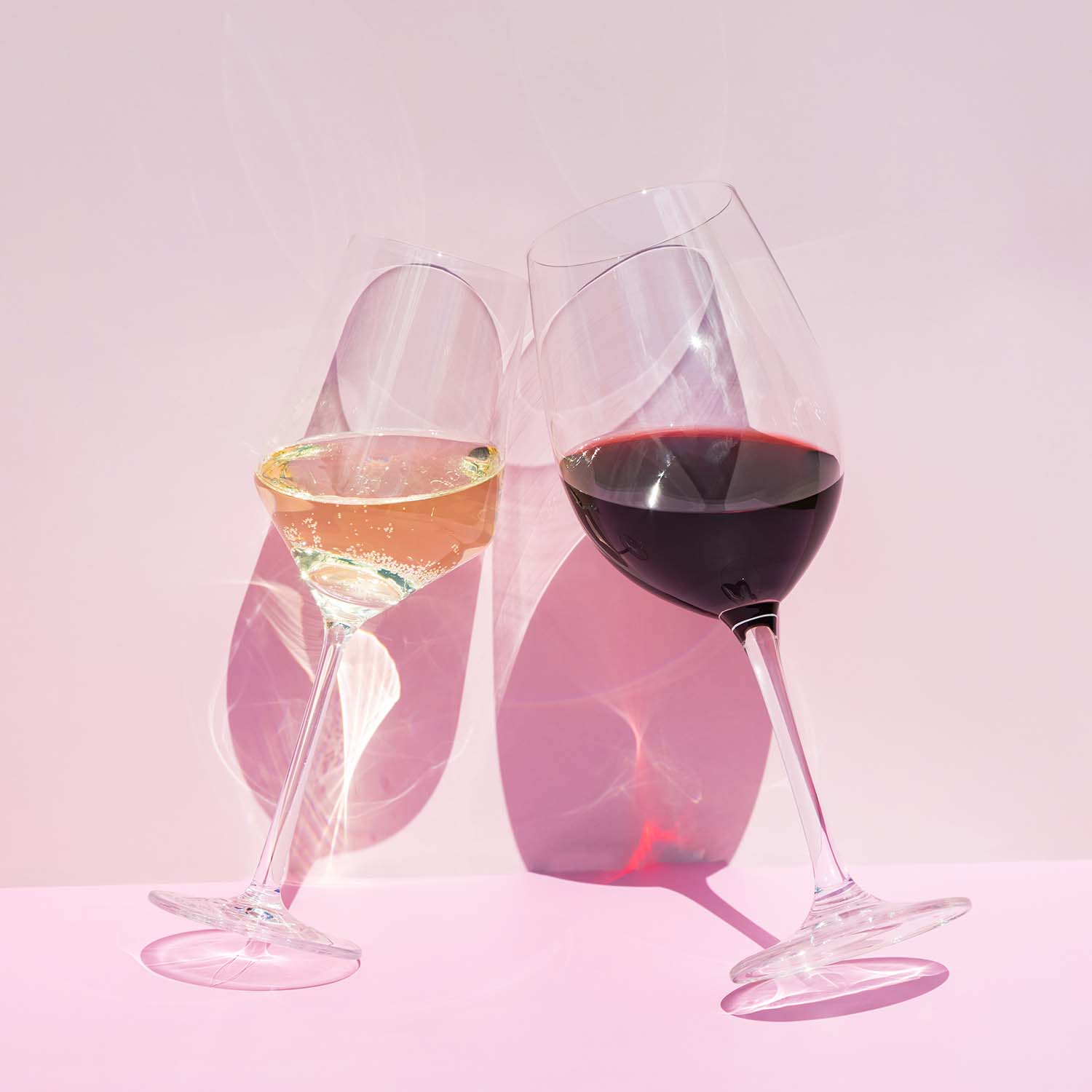
Pour red Rhône wine into a large red wine glass, so the fruit and spices have room to develop. For a Châteauneuf-du-Pape or syrah, choose a tall, large bowl; for white and rosé, use a smaller glass. These are the glasses we recommend ourselves.


Everything you still wanted to know about Rhône wine
Can't find your question here? Read more about wine and food, or get in touch.
Wine and food pairing →What is Rhône wine?
What is the difference between the northern and southern Rhône?
What is a GSM blend?
What is the difference between Côtes du Rhône and Côtes du Rhône Villages?
How much alcohol is in Rhône wine?
What do you eat with Côtes du Rhône?
Buy Rhône wine
Want the bottle delivered straight to your door? Order Rhône wine online from Gall & Gall. Gall & Gall has 77 options, 11 of which are on sale.

Vidal-Fleury Cotes Du Rhone Organic
Montirius La Muse Papilles

Cave de Tain Crozes Hermitage

Montirius Vacqueyras
Prices as of October 8, 2026, as provided by Gall & Gall. You can find the current price and stock at Gall & Gall. Glazen.nl receives a small commission if you buy something through these links; you pay nothing extra. No 18, no alcohol.