


The Canchánchara recipe
according to the IBA specification
Stir the honey, water, and lime juice together in the tumbler until the honey has completely dissolved.
Swirl the glass so the mixture runs over the bottom and sides.
Fill the glass to the rim with coarsely crushed ice and pour the aguardiente over it.
Stir vigorously from the bottom upward with a bar spoon for about ten seconds so the honey is distributed throughout the drink.
Garnish with a lime wedge.
What did you think of this recipe?
One click on a star is all it takes. If you'd like to add something, we'll read it first before it appears here.
Save this recipe
Send the Canchánchara recipe to your own email so you'll have it handy when you make it. You'll also receive a €5 discount code on orders from €50 for the glasses that go with it.
The story
Canchánchara comes from Trinidad and the Valle de los Ingenios, the old sugarcane-growing region in central Cuba. According to tradition, the mambises, the Cuban freedom fighters, drank it during the Ten Years' War from 1868 to 1878 and later during the War of Independence from 1895 to 1898. They used whatever was available: aguardiente, honey, and lime, diluted with water. The drink was considered a pick-me-up against cold and fatigue and was also drunk by enslaved workers on the sugarcane plantations. It was served in a jícara, originally a small bowl made from the dried fruit of the calabash tree and nowadays made of clay. Outside the region, it remained unknown for a long time. In Trinidad, Taberna La Canchánchara still serves it in earthenware cups, and the IBA has included it on its official list.
The right glass
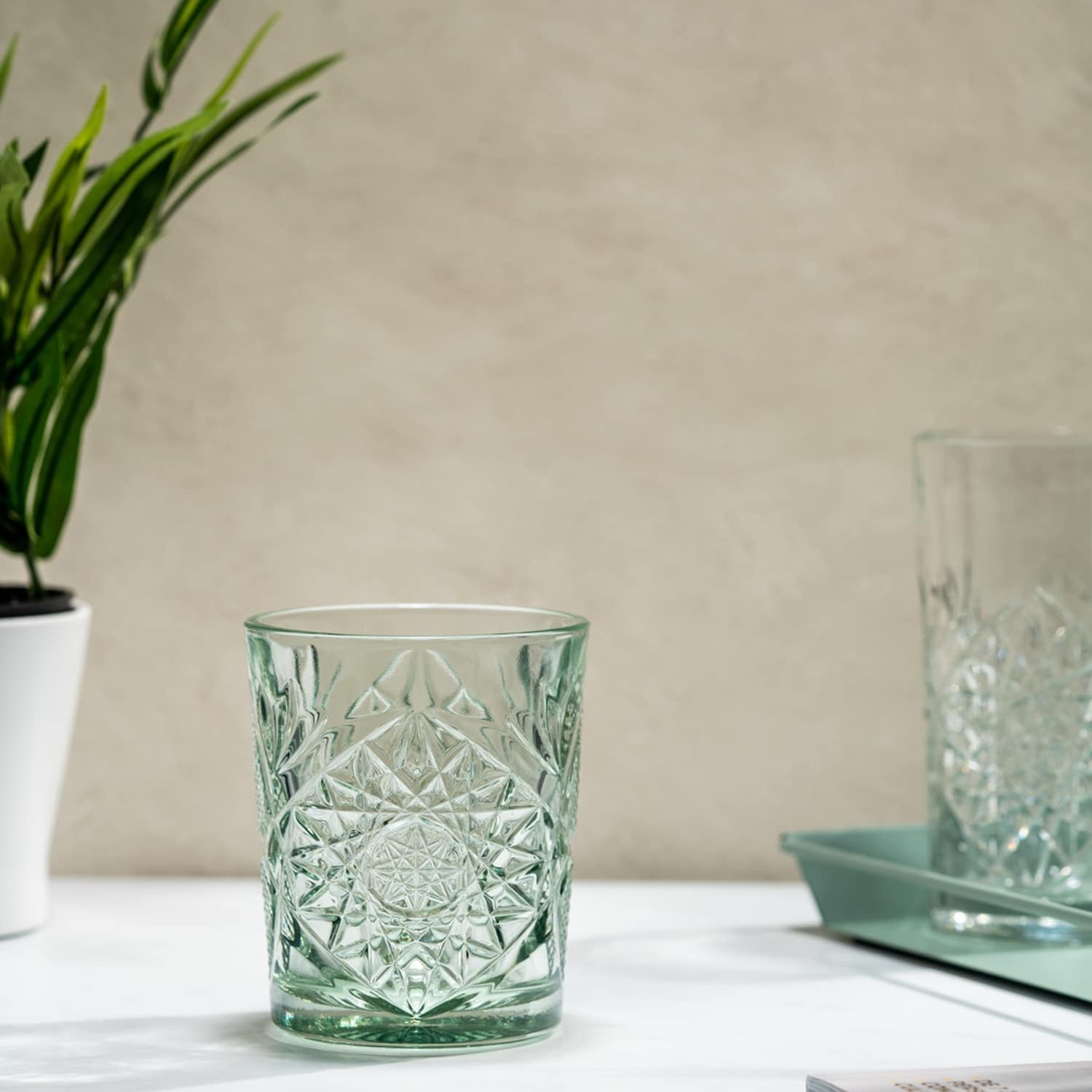
In Trinidad, Canchánchara is served in a jícara, a small, thick-walled earthenware cup. At home, a 30 to 38 cl tumbler is the best substitute. The wide base leaves room to mix the honey, water and lime and stir vigorously, and it holds about 14 cl of drink plus ice. Thick glass keeps the drink cold for longer, just like clay, and a tumbler feels sturdy in the hand. View our tumbler glasses.

Eclat Longchamp Tumbler 32 cl (6 pieces)

RCR Aria Tumbler 38 cl (6 pieces)
Both sets together € 63,90.
The right tools
For a Canchánchara, in addition to the glass, you use a bar spoon for stirring, a jigger for precise measuring and a citrus juicer. These are the bar tools we use ourselves; you can find everything in our bar tools & cocktail sets.


Glass set (our choice 01) + 3 bar tools together € 79,80.
What do you use to make a Canchánchara?
You need rum for a Canchánchara. Well-known bottles include Havana Club. On each drink page, you can read the alcohol percentage, what it tastes like, which cocktails it pairs with and which glass you need.


Variations & twists
Outside Cuba, you usually replace aguardiente with white Cuban rum; this gives you a softer, cleaner drink. You can also briefly shake everything with ice and pour without straining, which makes the honey easier to mix, although the ritual is lost. If you like this style, try the Daiquiri with sugar instead of honey, the Mojito with mint and sparkling water, or the Old Cuban with aged rum, mint and champagne.
Serving tip
If you have an earthenware cup, put it in the freezer for fifteen minutes: clay retains the cold for a long time, just as it does in Trinidad. Use coarsely cracked ice instead of fine crushed ice so the drink does not become watered down too quickly. Half a teaspoon of extra honey makes it rounder without making it sweet.
Good to know
Canchánchara recipe: the ingredients at a glance
The IBA sticks to four ingredients: 6 cl Cuban aguardiente, 1.5 cl fresh lime juice, 1.5 cl raw honey, and 5 cl water. The water stands out, because in most cocktails dilution comes only from the ice. Here, it is a deliberate component: it makes the powerful aguardiente more drinkable and helps dissolve the honey. Honey and lime are used in equal parts, so the drink is more refreshing than sweet. Garnish with a lime wedge. Nothing more is needed, and that simplicity is precisely the charm of this rustic classic.
What is aguardiente and what do you use instead
Aguardiente de caña is a young, powerful sugarcane distillate from Cuba. It has a rougher, fuller flavor than light Cuban rum, and it is even one of the building blocks used to make Cuban rum. Outside Cuba, genuine aguardiente is difficult to find. The usual substitute is white Cuban rum, such as Havana Club 3 Años. It produces a softer, cleaner drink. If you want to bring back more of the rugged character, mix the white rum with a splash of rhum agricole or choose a robust white rum with a higher alcohol content.
Making a Canchánchara: why stir it in the glass
The IBA has you first mix honey, water, and lime juice and distribute the mixture over the bottom and sides of the glass. Then add the ice, and only after that the aguardiente. Finally, stir vigorously from the bottom upward. This order has a reason: honey dissolves poorly in cold alcohol but does dissolve in water. Diluting it first prevents a sticky lump from forming at the bottom. Stirring from the bottom upward lifts the honey through the drink. Use a long spoon from our bar spoons and stir for about ten seconds.
Difference from the Daiquiri and the Caipirinha
All three combine a sugarcane spirit with lime and something sweet, but they are built differently. The Daiquiri is white rum, lime, and sugar, shaken and served without ice in a coupe. The Caipirinha comes from Brazil and uses cachaça with lime wedges and sugar muddled in the glass. The Canchánchara uses honey instead of sugar and adds water, making it softer and longer. It is the most laid-back of the three, and the only one that, according to tradition, was already being drunk by soldiers in the field.
Which honey to choose
The IBA calls for raw honey, and that makes a difference. Raw honey is not heated and has more aroma than the clear squeeze bottles from the supermarket. Choose a mild flower honey; strong chestnut or heather honey quickly dominates. Liquid honey mixes more easily than crystallized honey. If your honey is very firm, first loosen it in the water with an extra teaspoon of hot water and let it cool. The Bee's Knees and Penicillin show how honey can also carry a cocktail with gin and whisky.
Making Canchánchara for a group
For six glasses, loosen 9 cl honey in 30 cl water and add 9 cl fresh lime juice. Store this honey mixture in a bottle in the refrigerator; it keeps for a day. When serving, divide 8 cl of the mixture between the base and sides of each glass, fill with ice and pour 6 cl aguardiente or white rum over it. Stir each glass separately from the bottom up. This way, everyone can enjoy the ritual, and you do not have to dissolve honey in each glass.
Frequently asked questions
What is a Canchánchara?
A simple Cuban cocktail made with aguardiente, honey, lime and water, stirred with ice. It originated around Trinidad and was reportedly drunk by Cuban freedom fighters in the nineteenth century. Traditionally, it is served in a small earthenware cup.
What is in a Canchánchara?
According to the IBA: 6 cl Cuban aguardiente, 1.5 cl fresh lime juice, 1.5 cl raw honey and 5 cl water. Mix the honey, water and lime in the glass, add ice and aguardiente, and stir vigorously. Garnish with a lime wedge.
Can I use rum instead of aguardiente?
Yes, outside Cuba, that is the usual substitute. White Cuban rum such as Havana Club 3 Años is the logical choice. It makes the drink slightly softer and cleaner than the more robust aguardiente, but the balance of honey, lime and water remains the same.
What do you serve a Canchánchara in?
Traditionally served in a jícara, a small earthenware cup. At home, a 30 to 38 cl tumbler works best: wide enough to dissolve the honey and stir vigorously, with thick glass that keeps the drink cold.
Everything for your bar,
to one address
Glasses in hospitality quality, supplied per set. Order today, delivered quickly.
Shop the glasses →